30 Professional Gallery Wall Decor Ideas: Designer Layouts & AI
Gallery walls have transformed from simple photo arrangements into sophisticated design statements that blend art, architecture, and personal narrative. In 2026, the most impactful gallery walls are those that tell a story while demonstrating a keen eye for composition, texture, and balance. Whether you're an interior designer curating for a client or a homeowner seeking to elevate your space, this professional guide delivers 30 gallery wall concepts, each accompanied by a detailed AI image prompt ready for use in Midjourney, DALL-E 3, or Adobe Firefly.
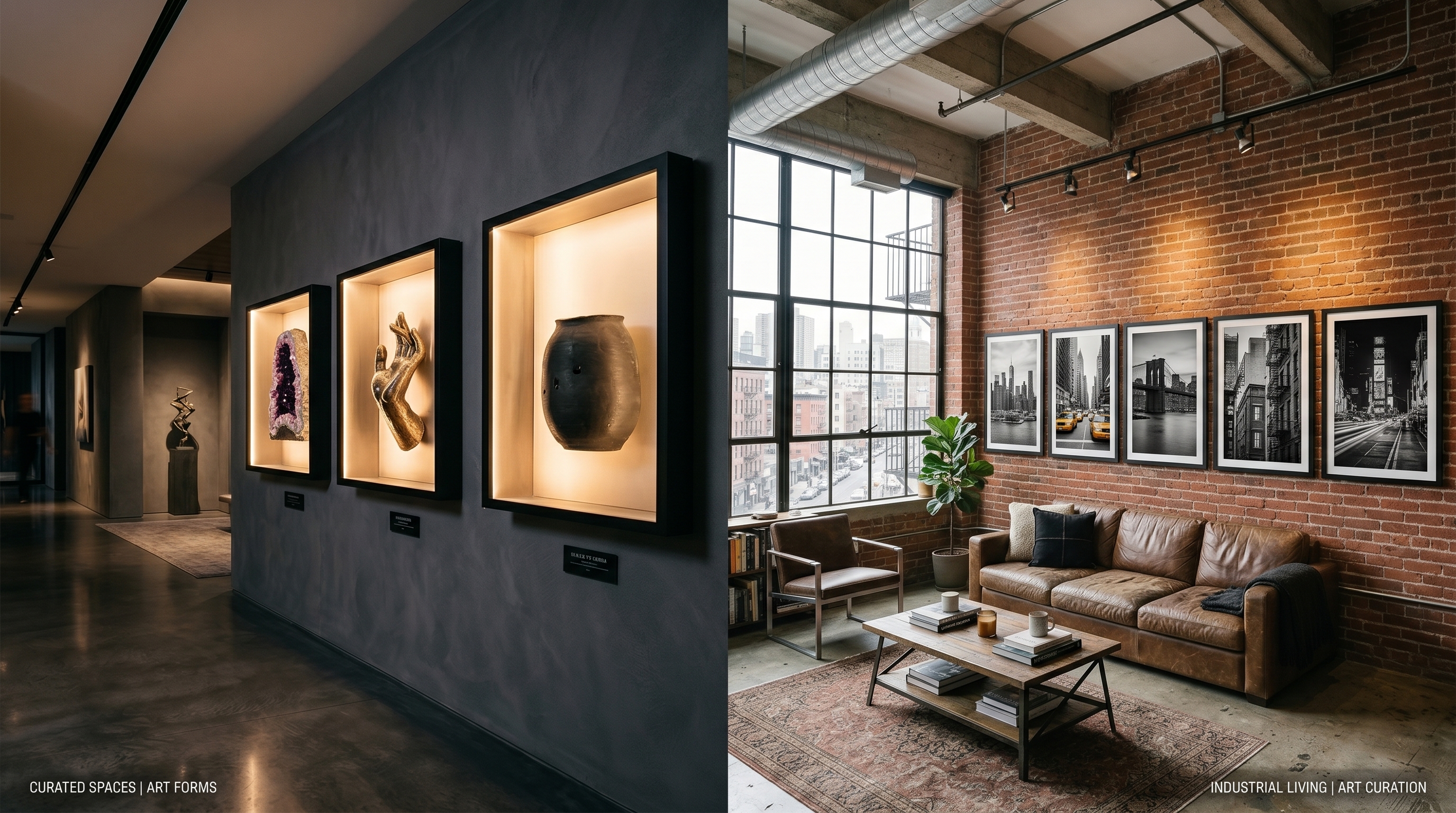
Introduction: The Art of the Curated Wall
A professionally executed gallery wall is more than decoration it's a reflection of your design philosophy. The difference between amateur and expert lies in intentionality: frame spacing, color harmony, scale variation, and the strategic use of negative space. Today's trends move beyond rigid grids toward organic, layered compositions that incorporate mirrors, textiles, sculptural objects, and even ambient lighting.
This guide is organized by design archetypes Minimalist, Organic, Maximalist, Functional, and Architectural so you can quickly find inspiration that matches your project's needs. Each of the 30 ideas includes a professional grade AI prompt that specifies lighting, camera settings, materials, and mood.
Part 1: Minimalist & Contemporary
1. The Monochromatic Grid
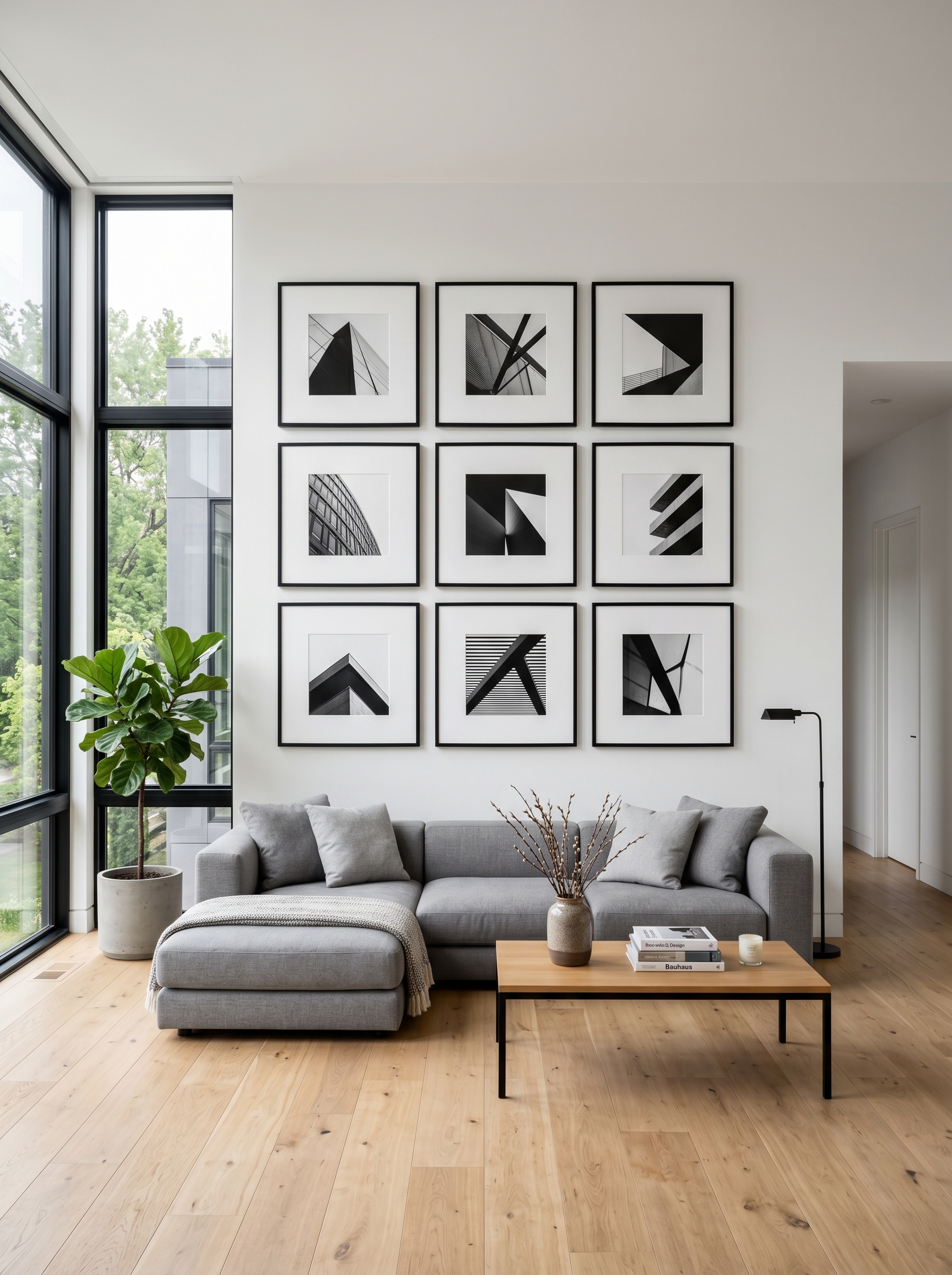
A perfect 3×3 arrangement of identically sized matte black frames housing black-and-white architectural photography.
Expert Tip: Use 2-inch white mats and UV-protective glass for a museum-quality finish.
2. The Single Oversized Statement
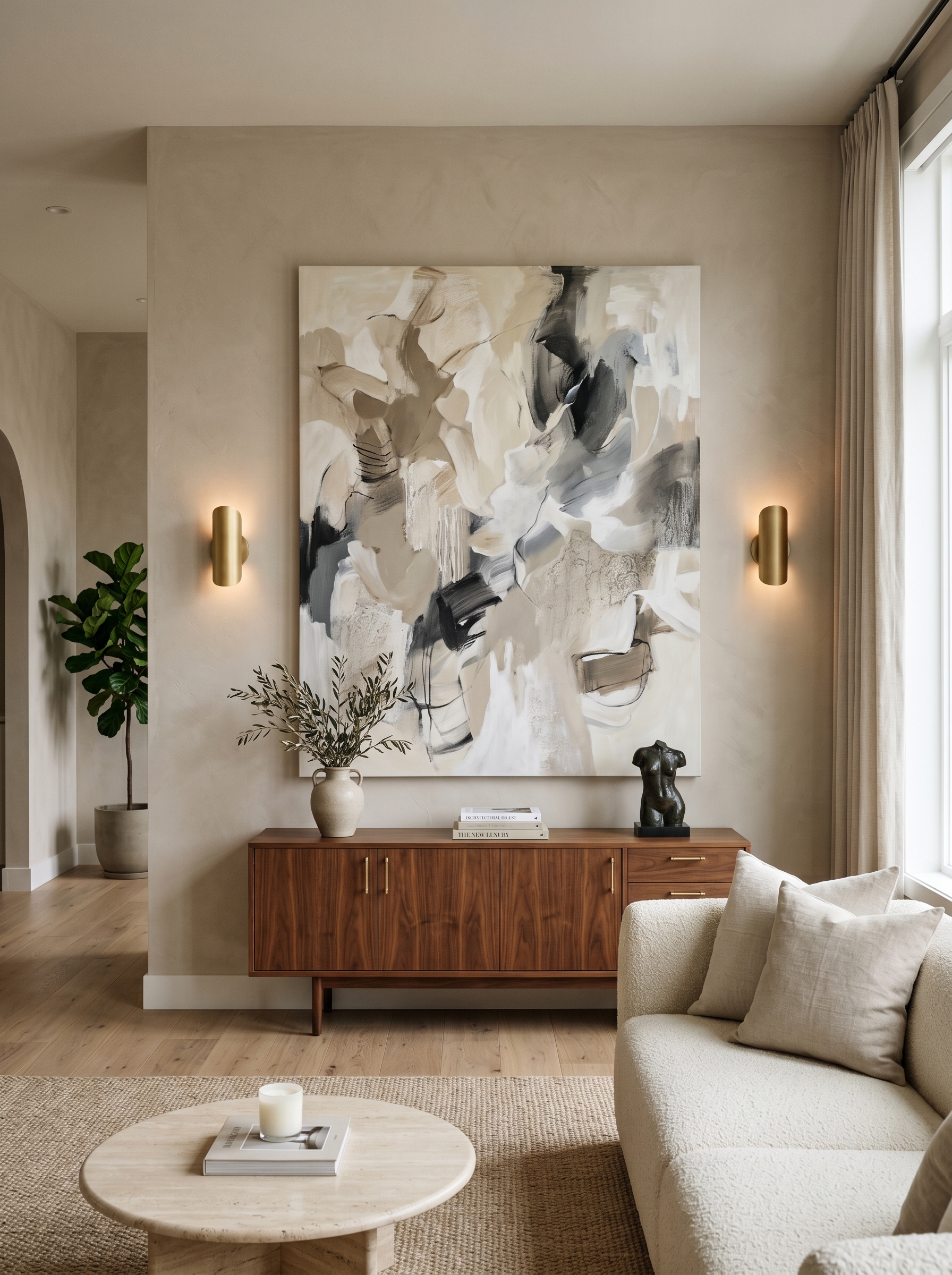
One monumental canvas (48×72 inches) flanked by two small brass sconces. No other art.
Expert Tip: The canvas should occupy ⅔ the width of the furniture below it.
3. The Vertical Salon Hang
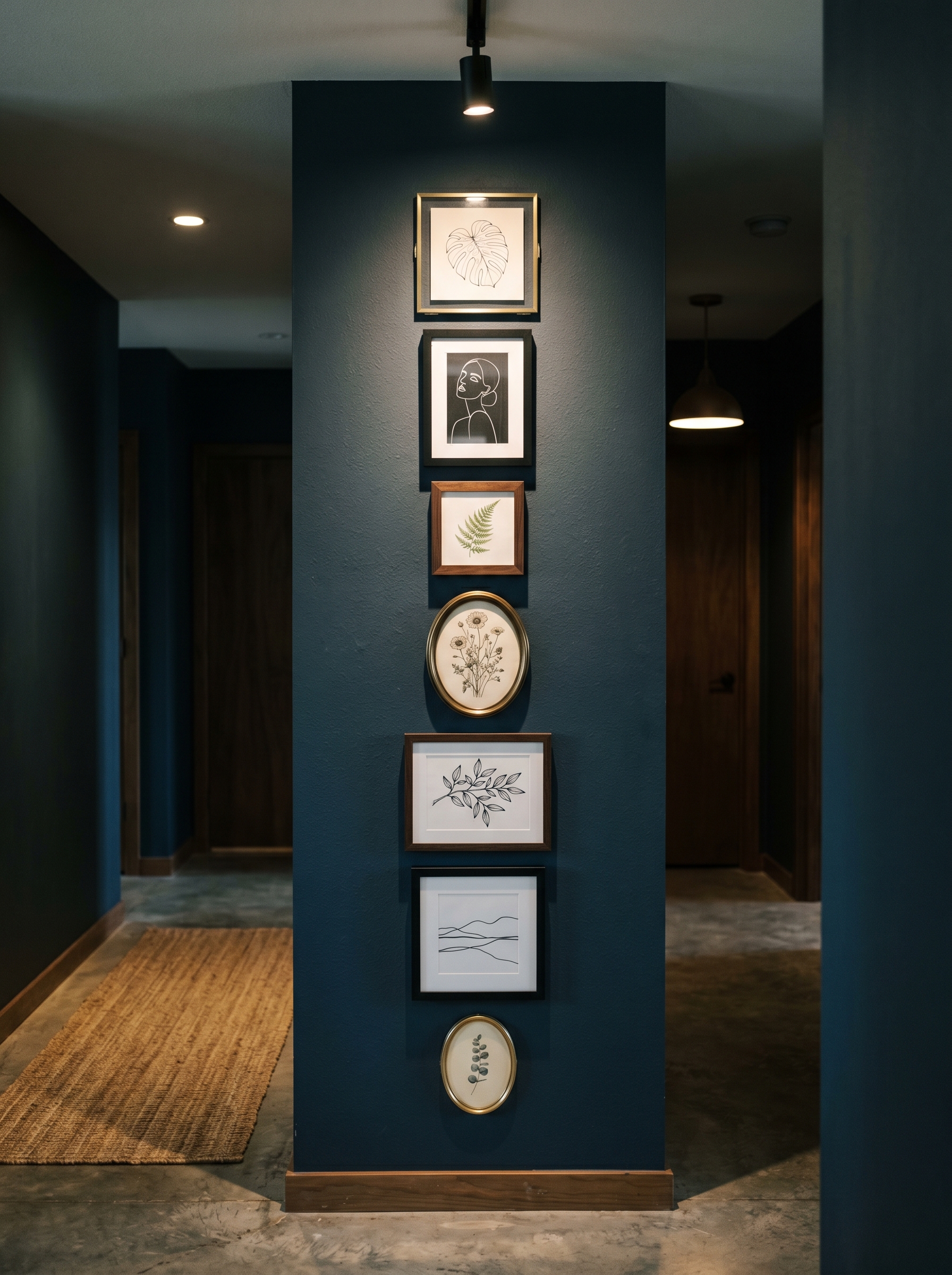
A narrow column of 6–8 small frames (4×6 to 8×10) hung tightly together, perfect for hallway niches.
Expert Tip: Align the outer left and right edges perfectly to create a strong vertical line.
4. The Floating Shelf Layering
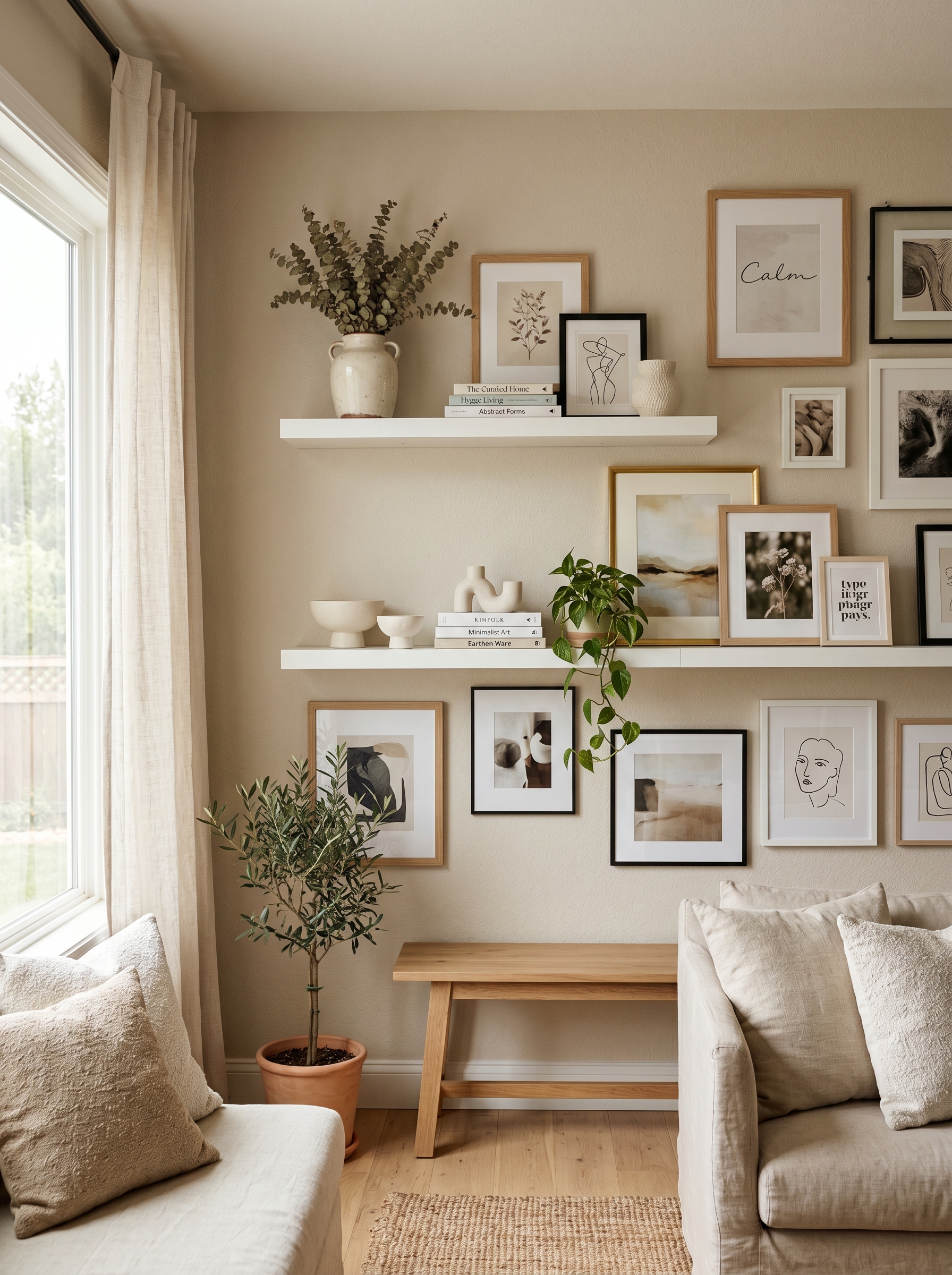
Two long white floating shelves with frames leaning, interspersed with ceramic vases and stacked books.
Expert Tip: Vary object heights a stack of books, then a low bowl, then a tall vase.
5. The Japandi Shadow Box Grid
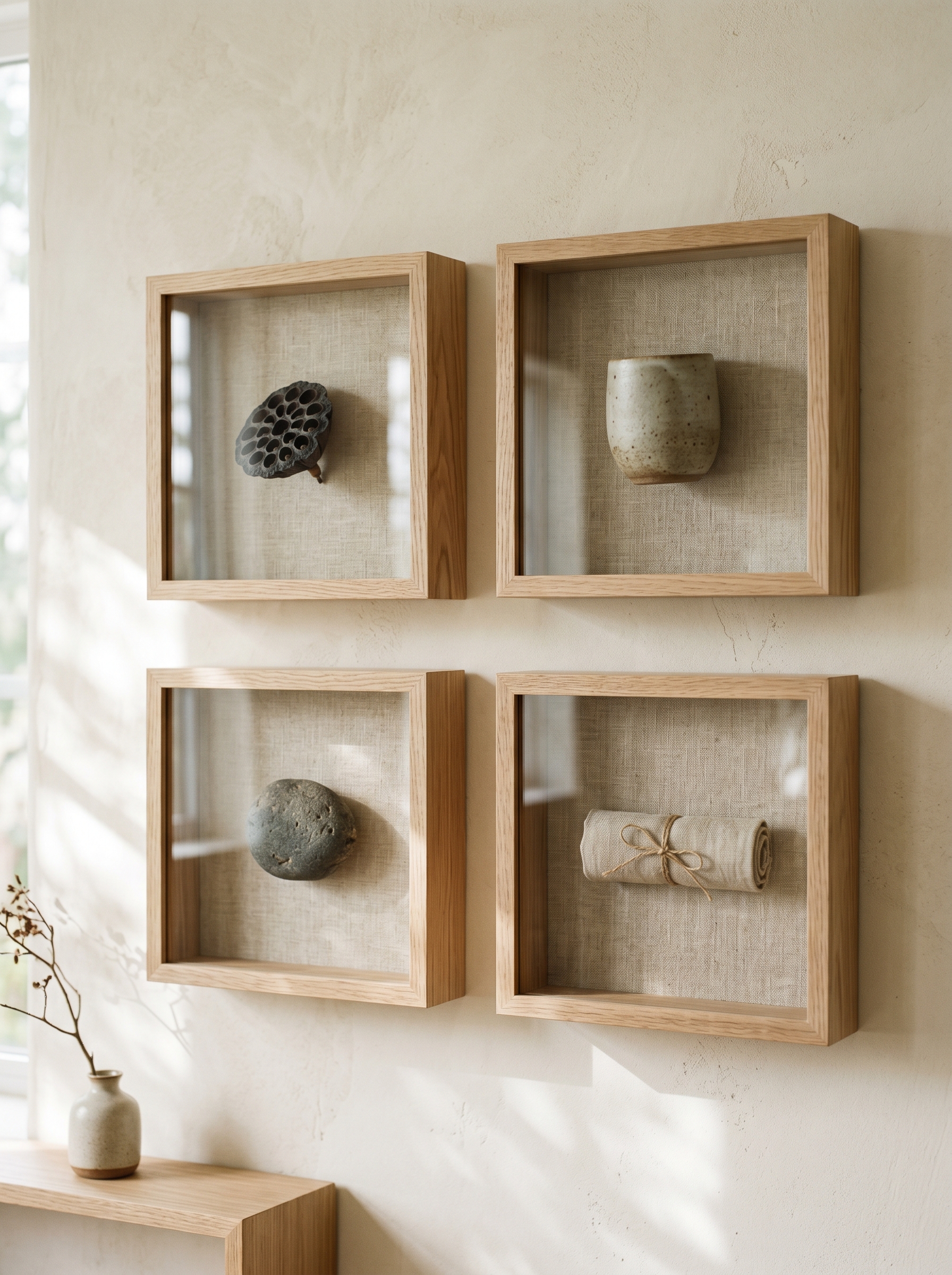
Four evenly spaced deep set shadow boxes in natural oak containing small ceramic objects and dried botanicals.
Expert Tip: Use museum wax to secure 3D objects inside the boxes.
6. The Painted Frame Insert
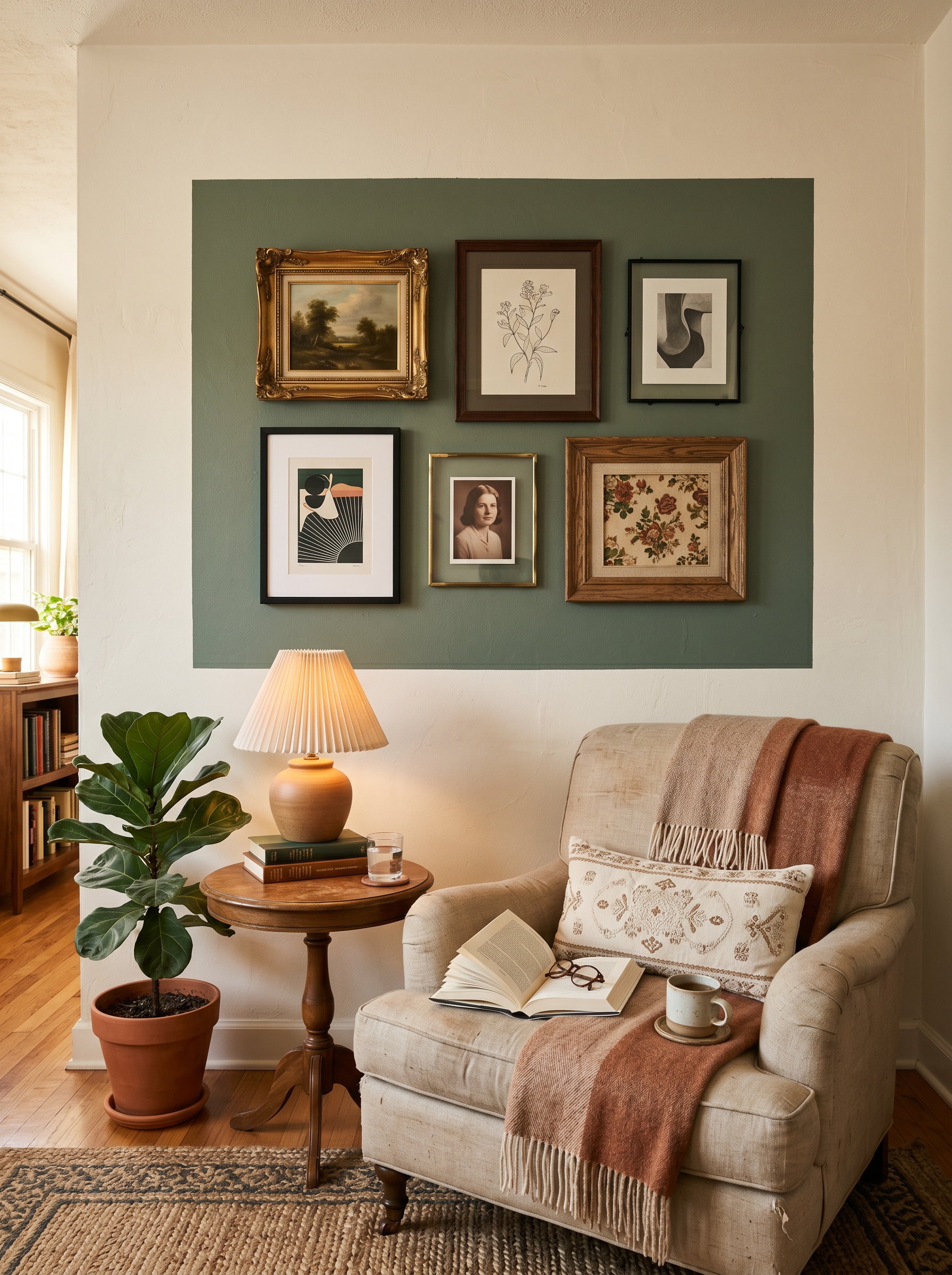
A large rectangular area painted in sage green acts as a "super-frame" containing an eclectic mix of 5–7 pieces.
Expert Tip: The painted shape unifies disparate art styles try a bold color like terracotta or navy.
Part 2: Organic & Eclectic (Ideas 7–12)
7. The Salon-Style Overlap
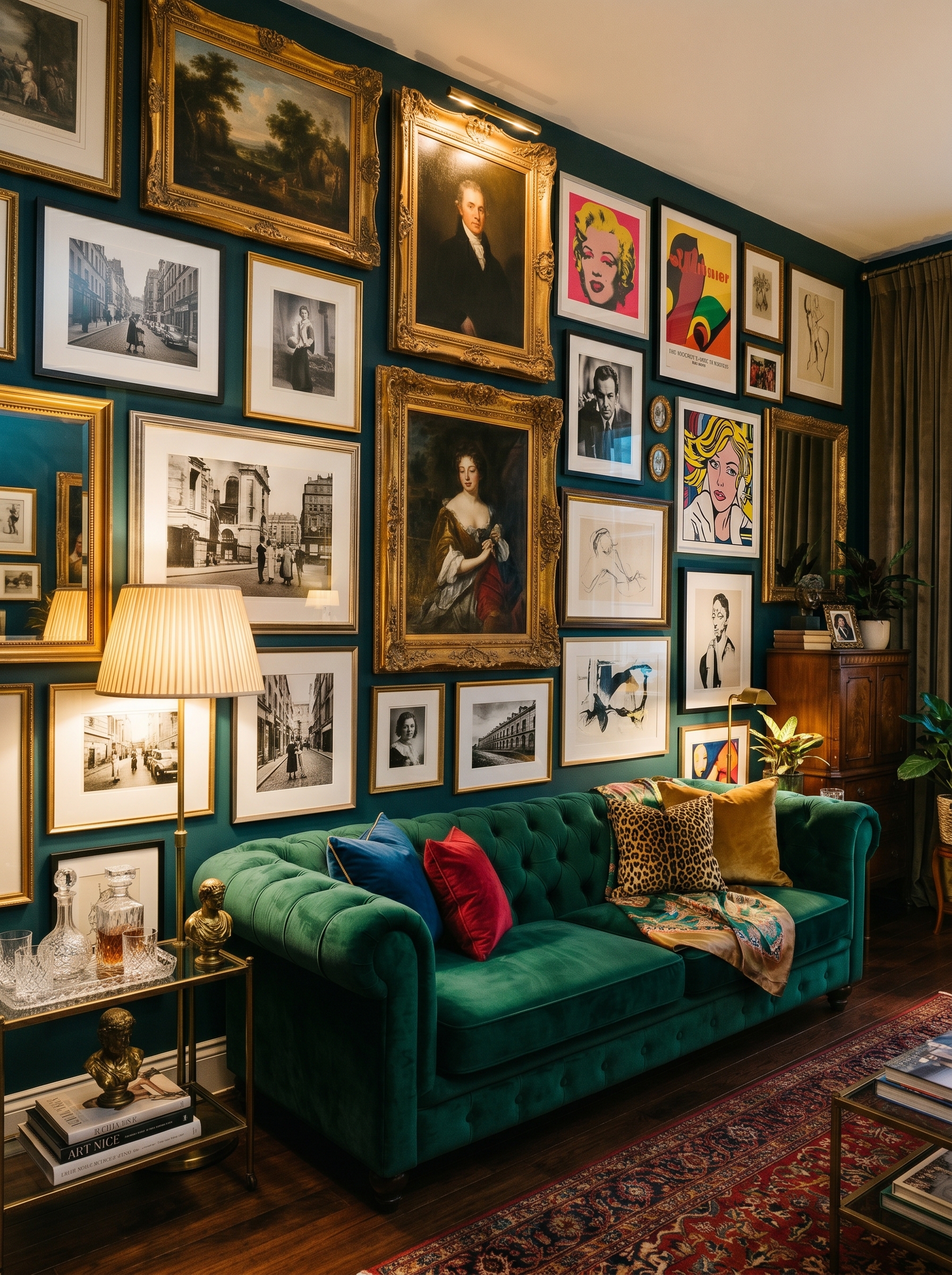
Frames of varying sizes hung so edges slightly overlap, creating a dense, luxurious "wall of art."
Expert Tip: Start with the largest piece in the center, then work outward, overlapping edges by 1–2 inches.
8. The Mirror & Art Fusion
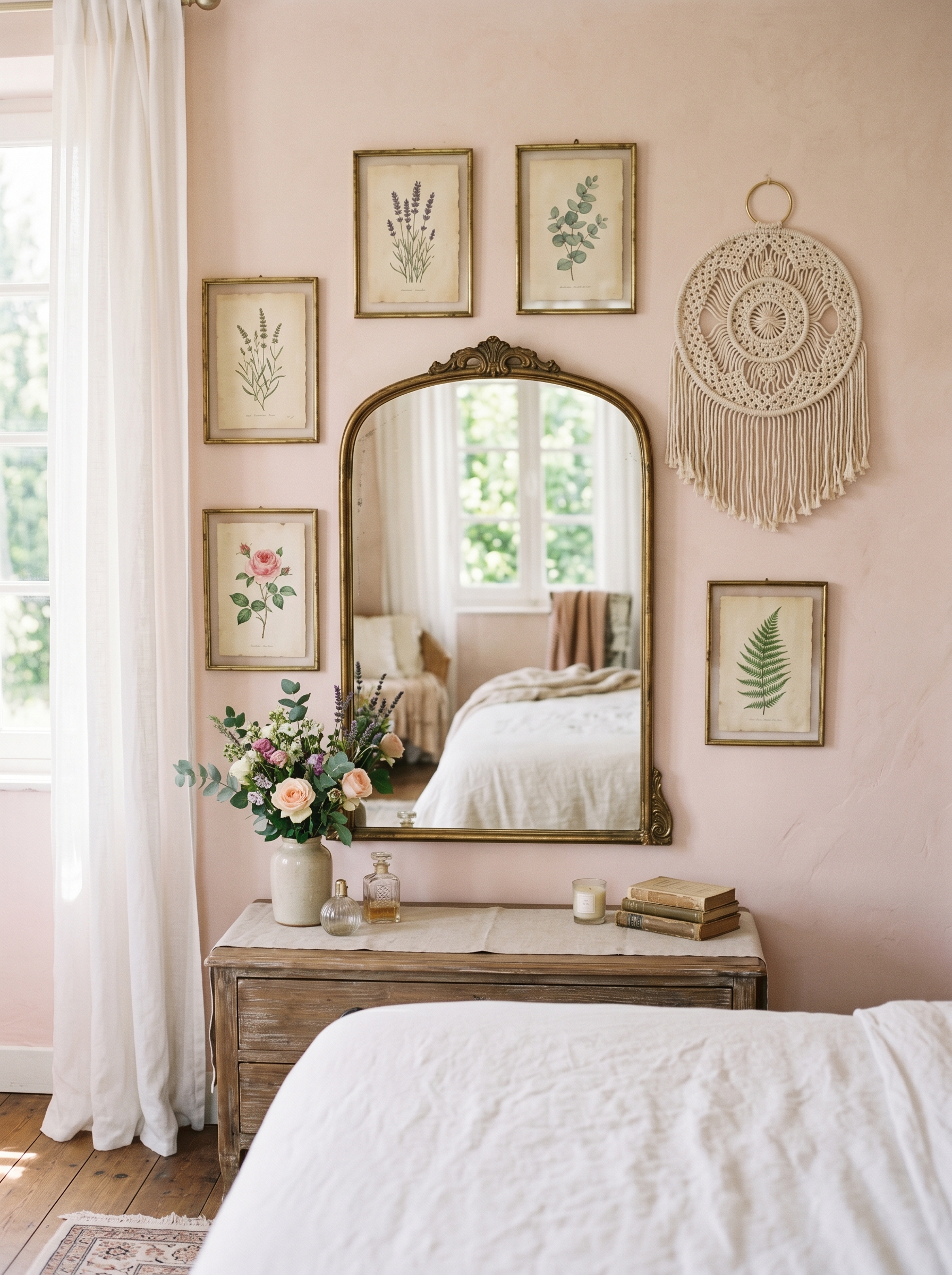
A large antique mirror surrounded by 4–6 smaller art prints and a macramé hanging.
Expert Tip: The mirror should be the largest piece to reflect light and expand the room visually.
9. The Global Souvenir Wall
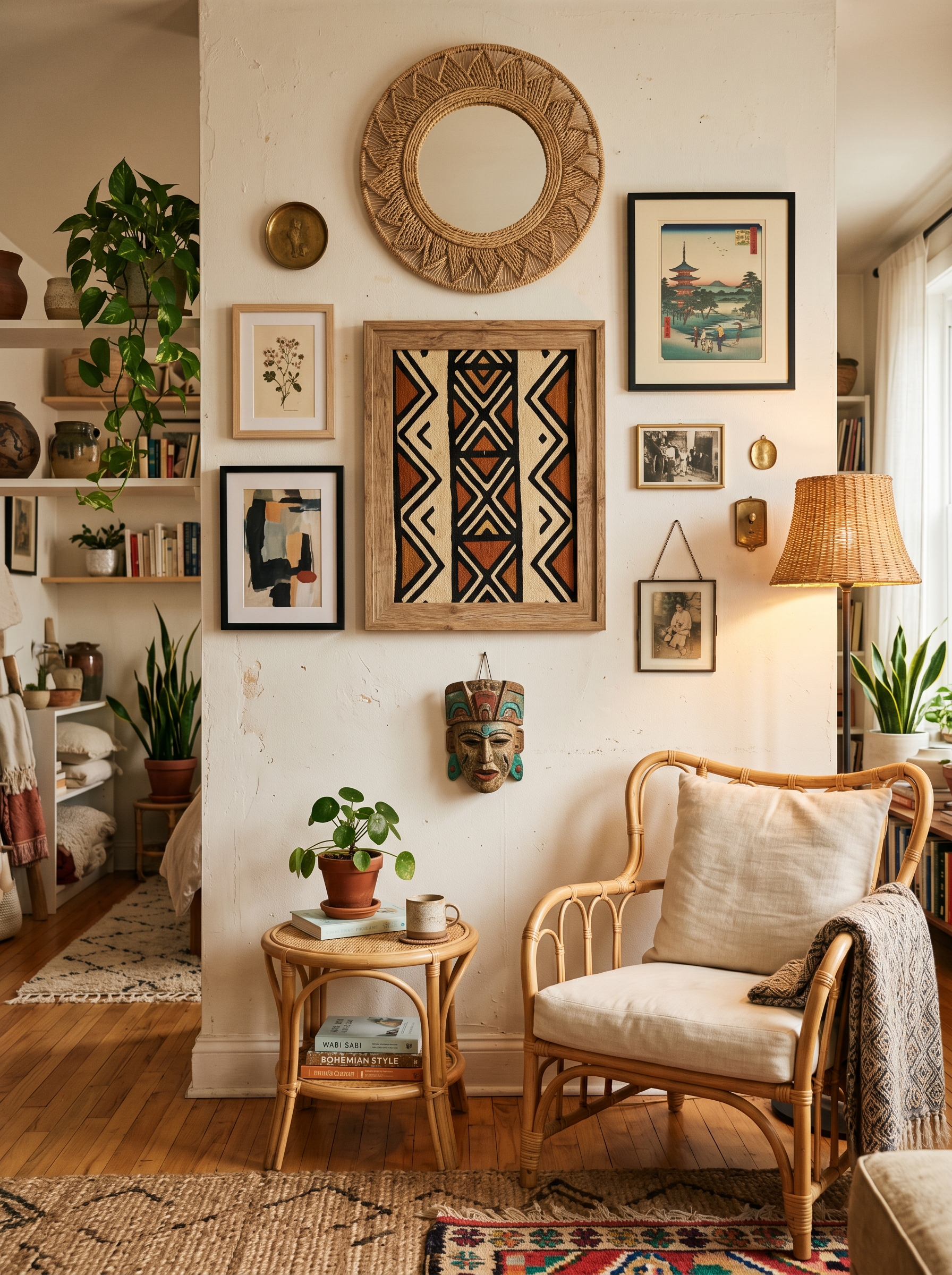
Framed textiles (ikat, mudcloth), carved masks, small baskets, and vintage travel posters. No traditional photos.
Expert Tip: Use deep-set box frames (1.5–2 inches deep) for 3D objects like masks.
10. The Color-Drenched Monochromatic
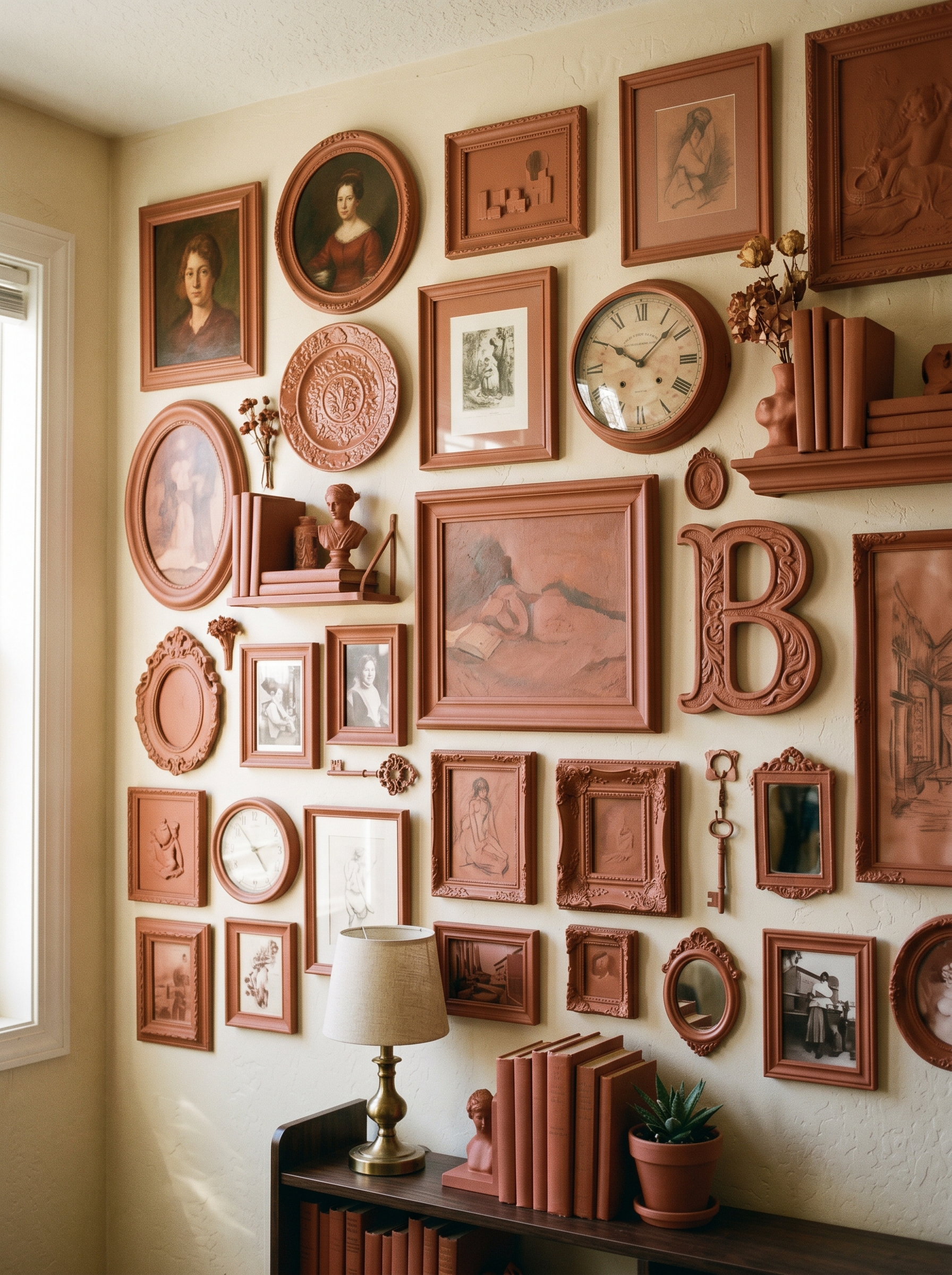
Every piece is painted the same color (e.g., matte terracotta), but frames and objects vary wildly.
Expert Tip: Spray-paint frames, ceramic plates, and even small clocks for uniform color with varied texture.
11. The Staircase Asymmetric Flow
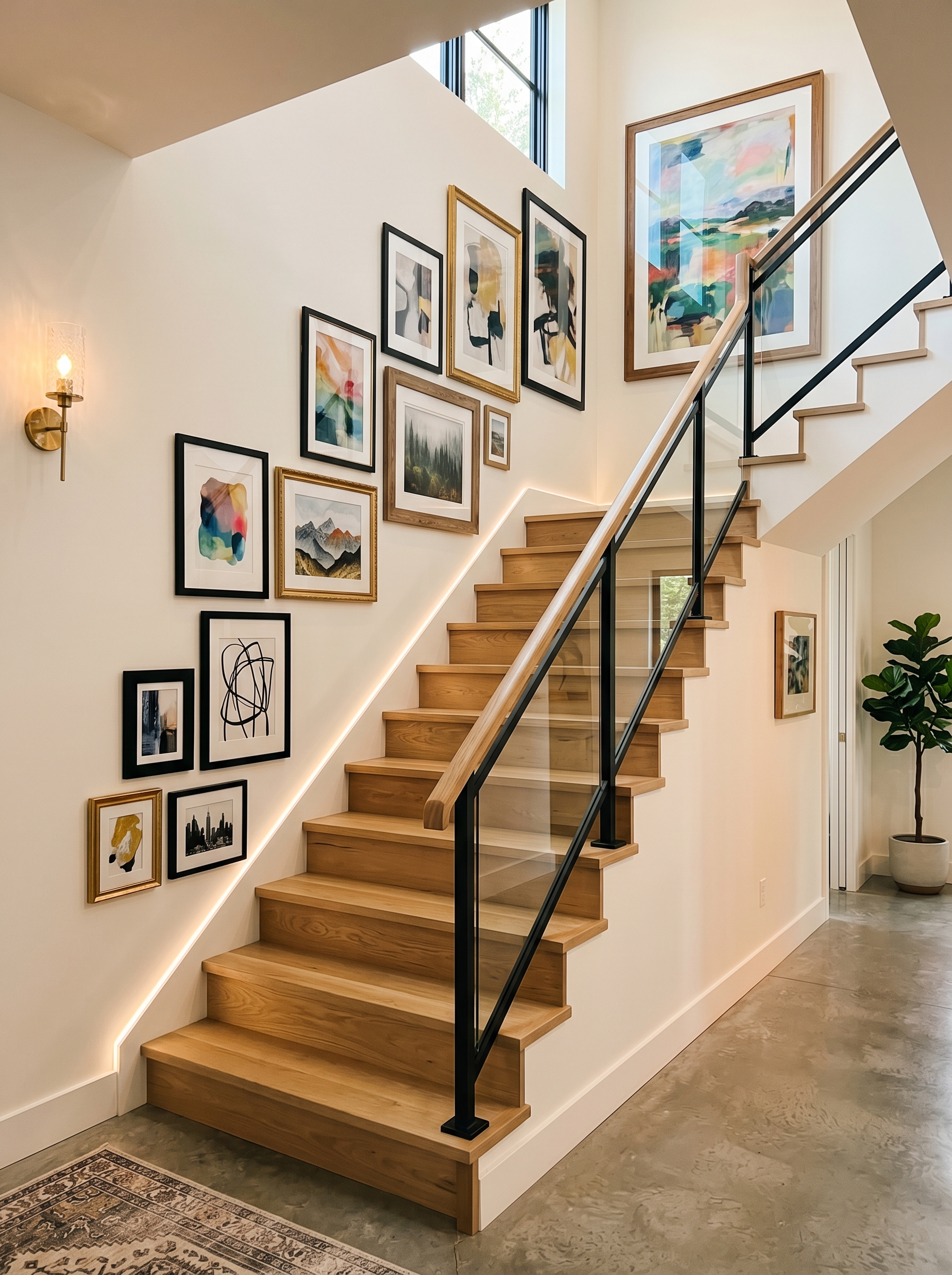
Art follows the angle of the stairs, with pieces ascending in size from small at the bottom to large at the top.
Expert Tip: The center of each piece should be 57–60 inches from the nose of each stair tread.
12. The Botanical Herbarium Wall
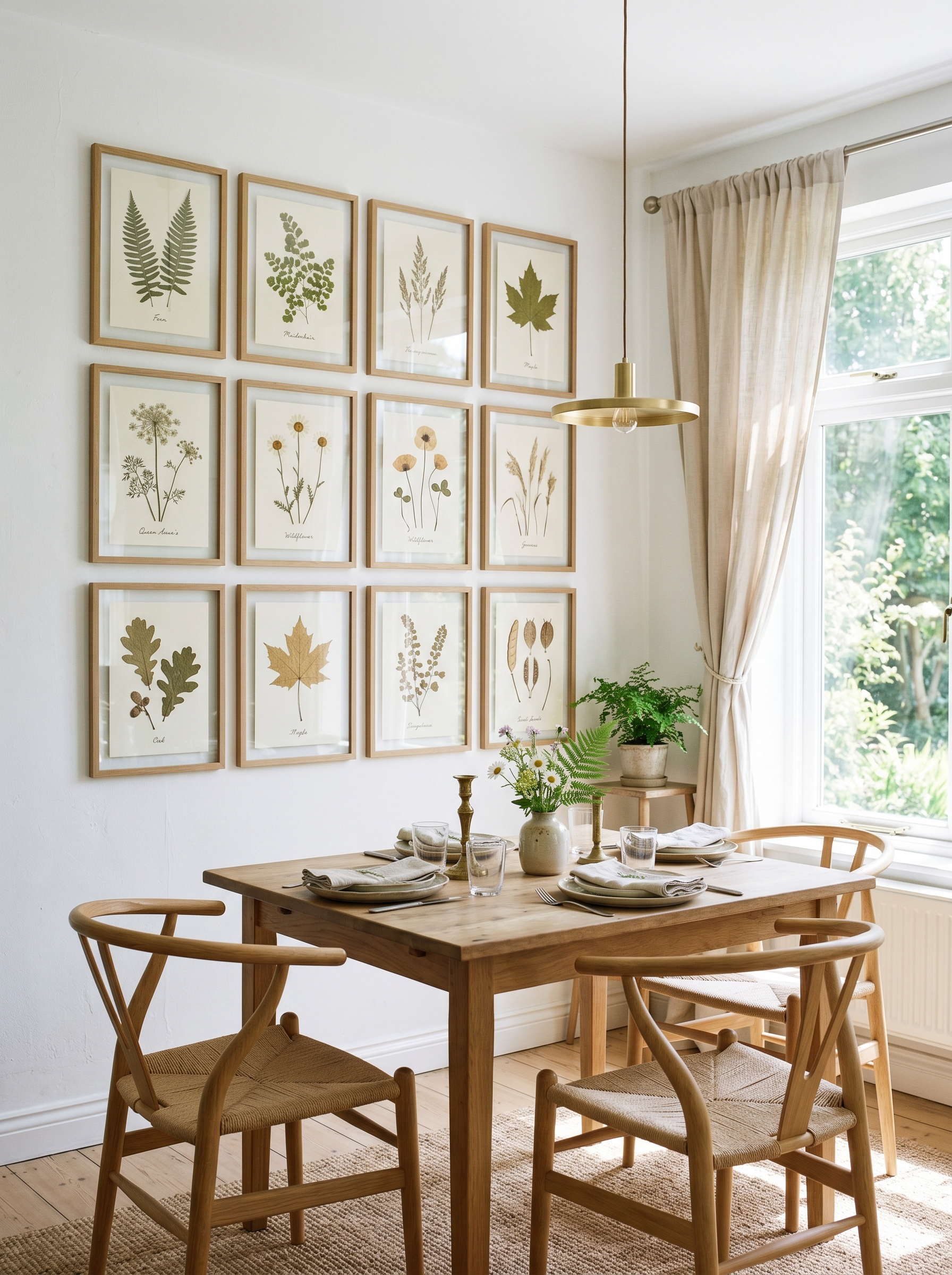
Pressed flowers and ferns in simple white or natural wood frames, hung in a loose grid.
Expert Tip: Use UV-filtering glass to prevent pressed botanicals from fading.
Part 3: Maximalist & Dramatic (Ideas 13–18)
13. The Dark Academia Wall
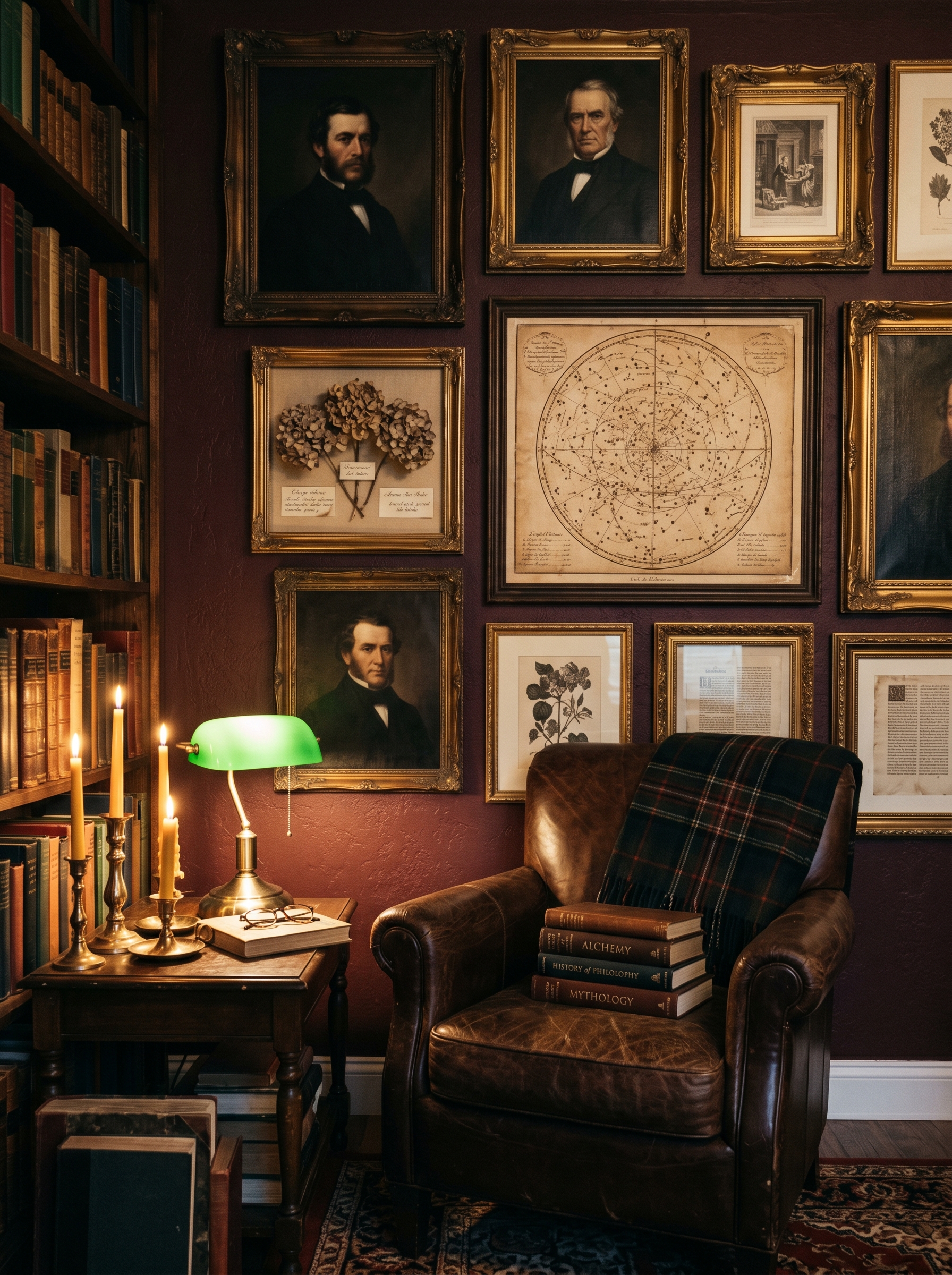
Moody vintage portraits, antique maps, and dried flowers in ornate dark wood and gold frames.
Expert Tip: Use amber or warm white LED picture lights mounted above key pieces.
14. The Pop Art Explosion
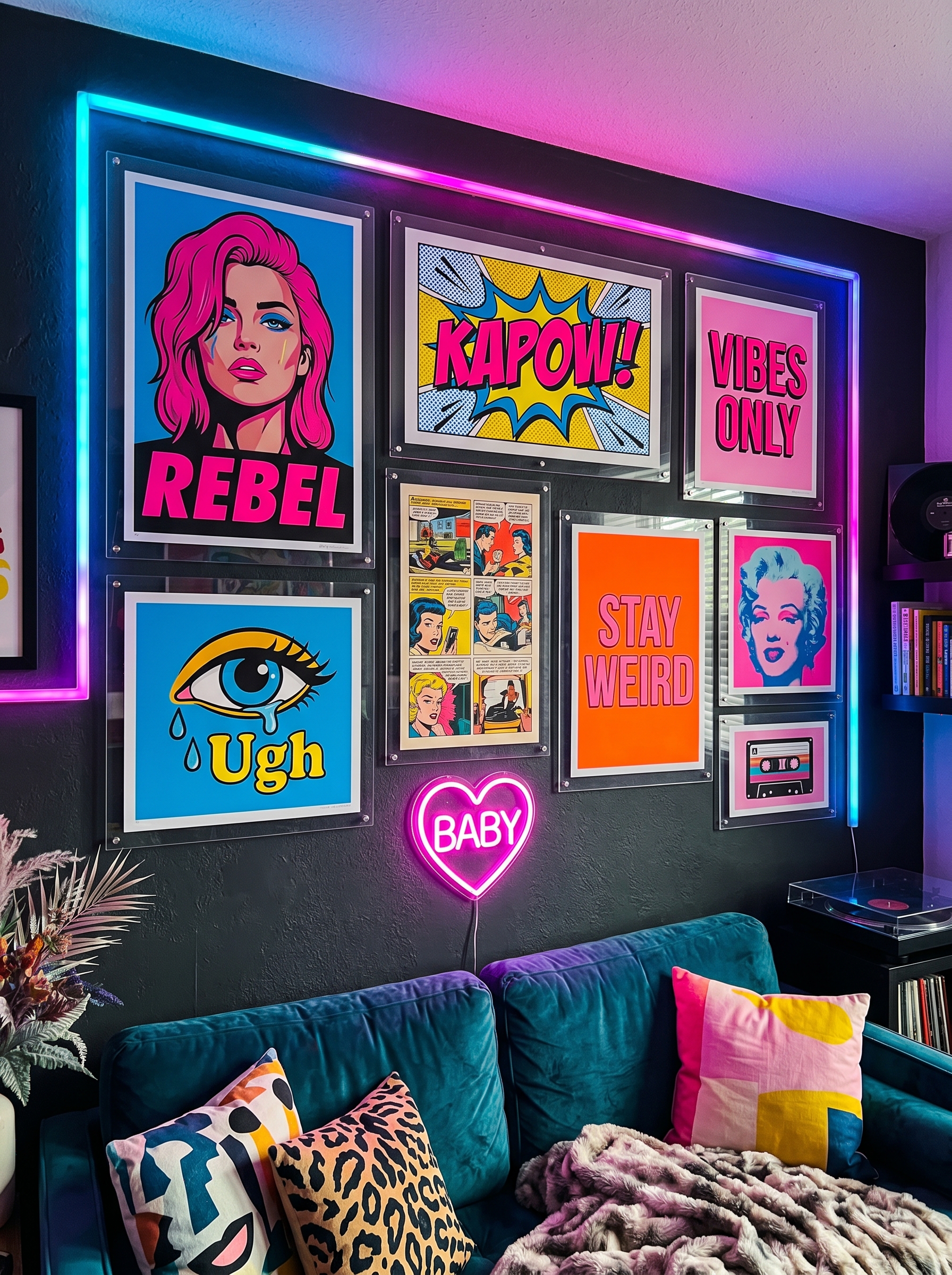
Bright Warhol-esque prints, comic strips, and neon accents in sleek acrylic frames.
Expert Tip: Paint the wall a stark white or charcoal to make colors pop.
15. The Gilded Maximalist
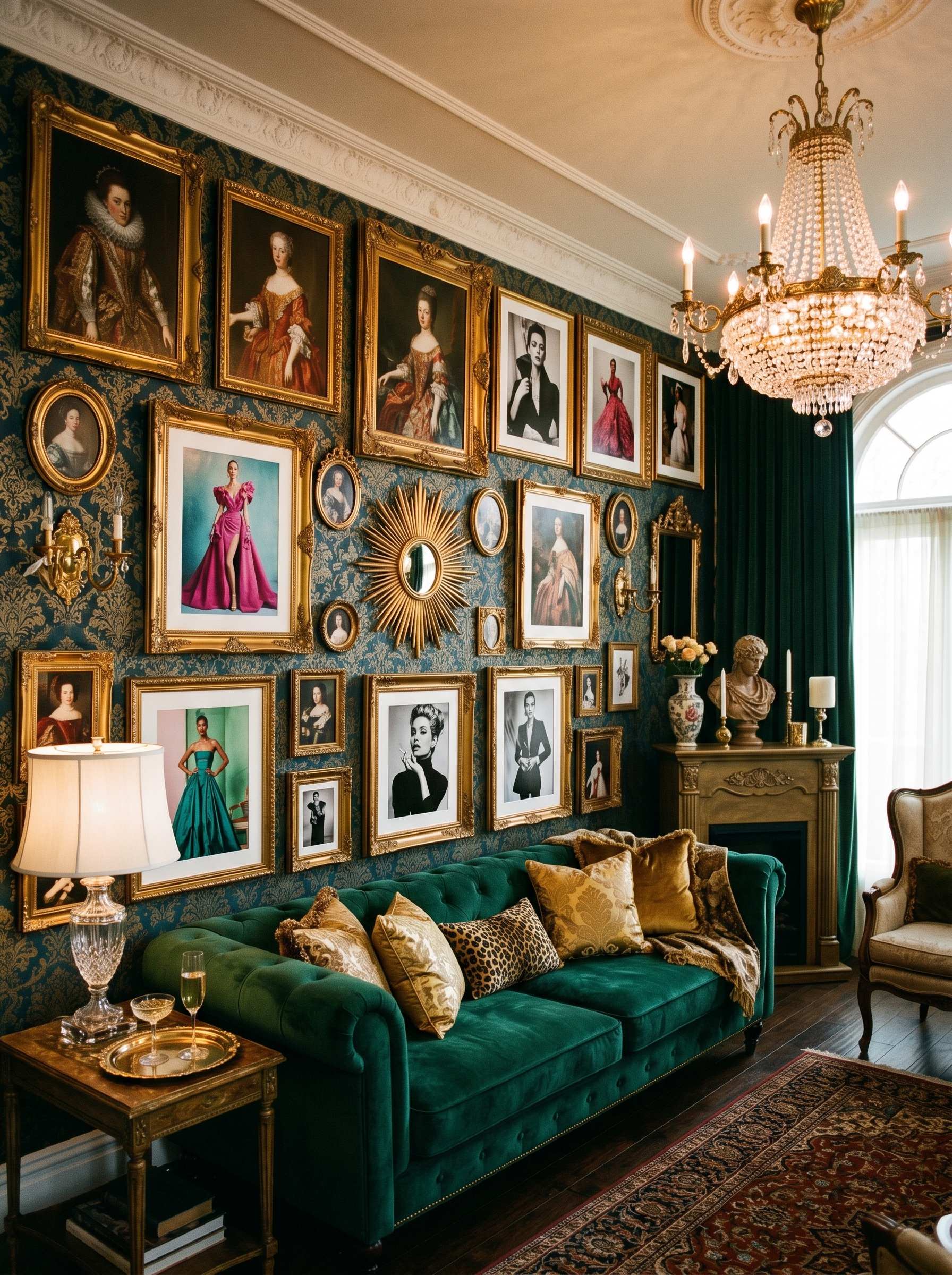
All frames are ornate gold or brass, with artwork that includes baroque paintings and modern photography.
Expert Tip: Unify by using only gold tones (no silver or black) and adding a gold-leafed sculptural object.
16. The Floor-to-Ceiling Tower
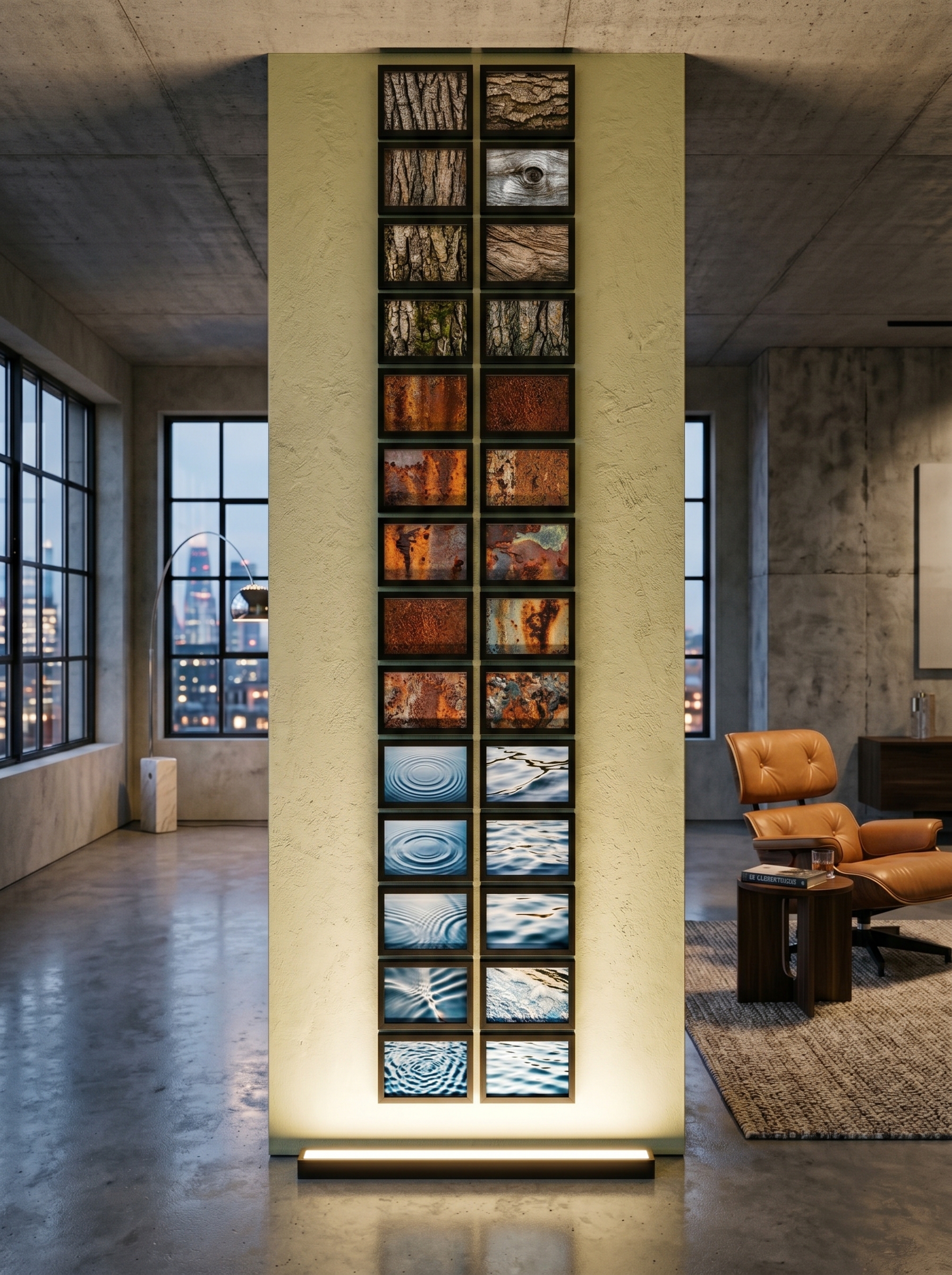
A single narrow vertical strip (18 inches wide) from floor to ceiling covered edge-to-edge with small identical frames.
Expert Tip: Use frames that are exactly the same size and finish 4×6 black metal works well.
17. The Ceiling-Drop Mobile Gallery
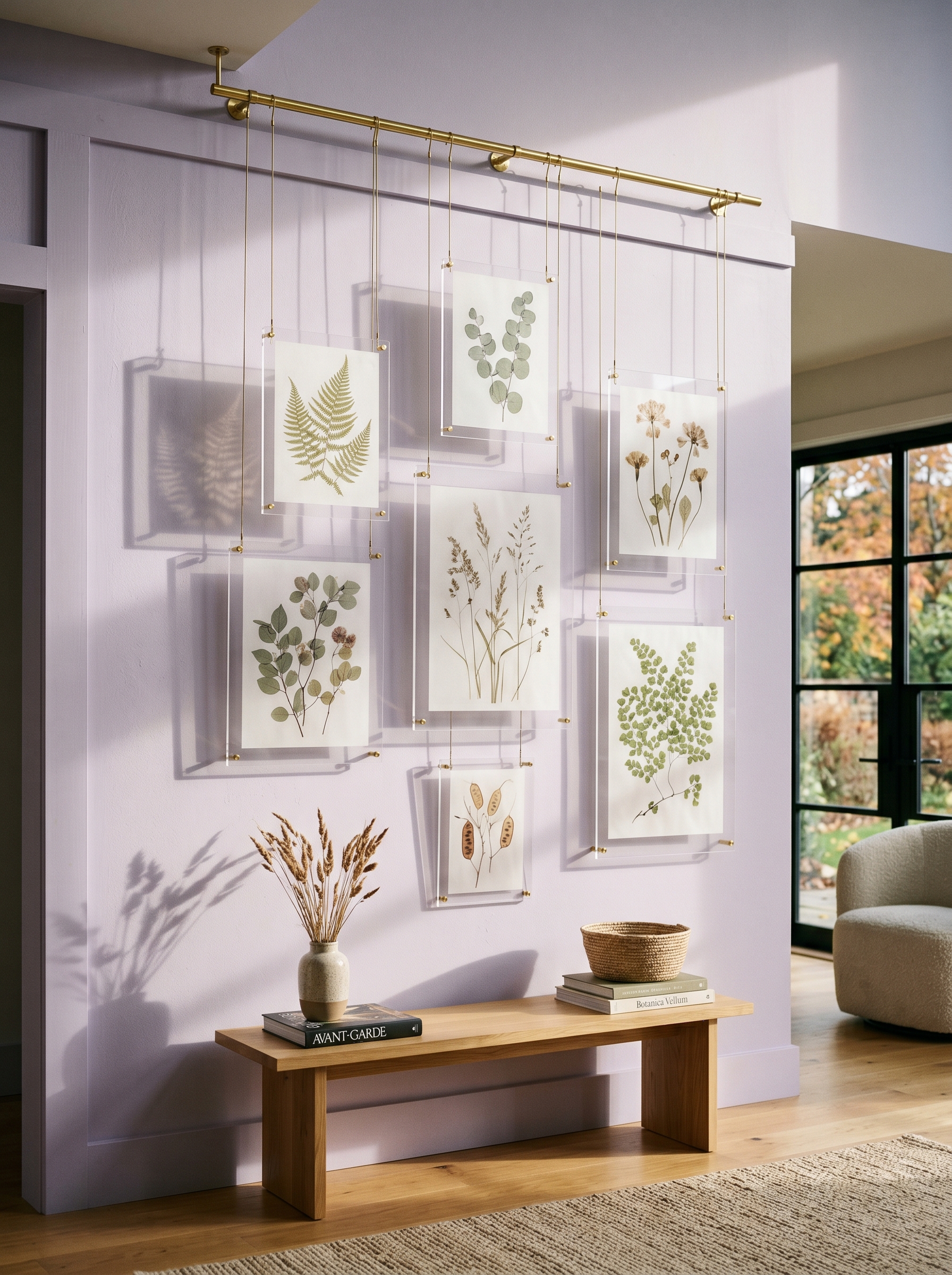
Frames hang from a ceiling-mounted brass rod using clear fishing wire at varying depths.
Expert Tip: Best in front of a large window or a very plain wall to emphasize shadows and depth.
18. The LED Neon Accent Wall
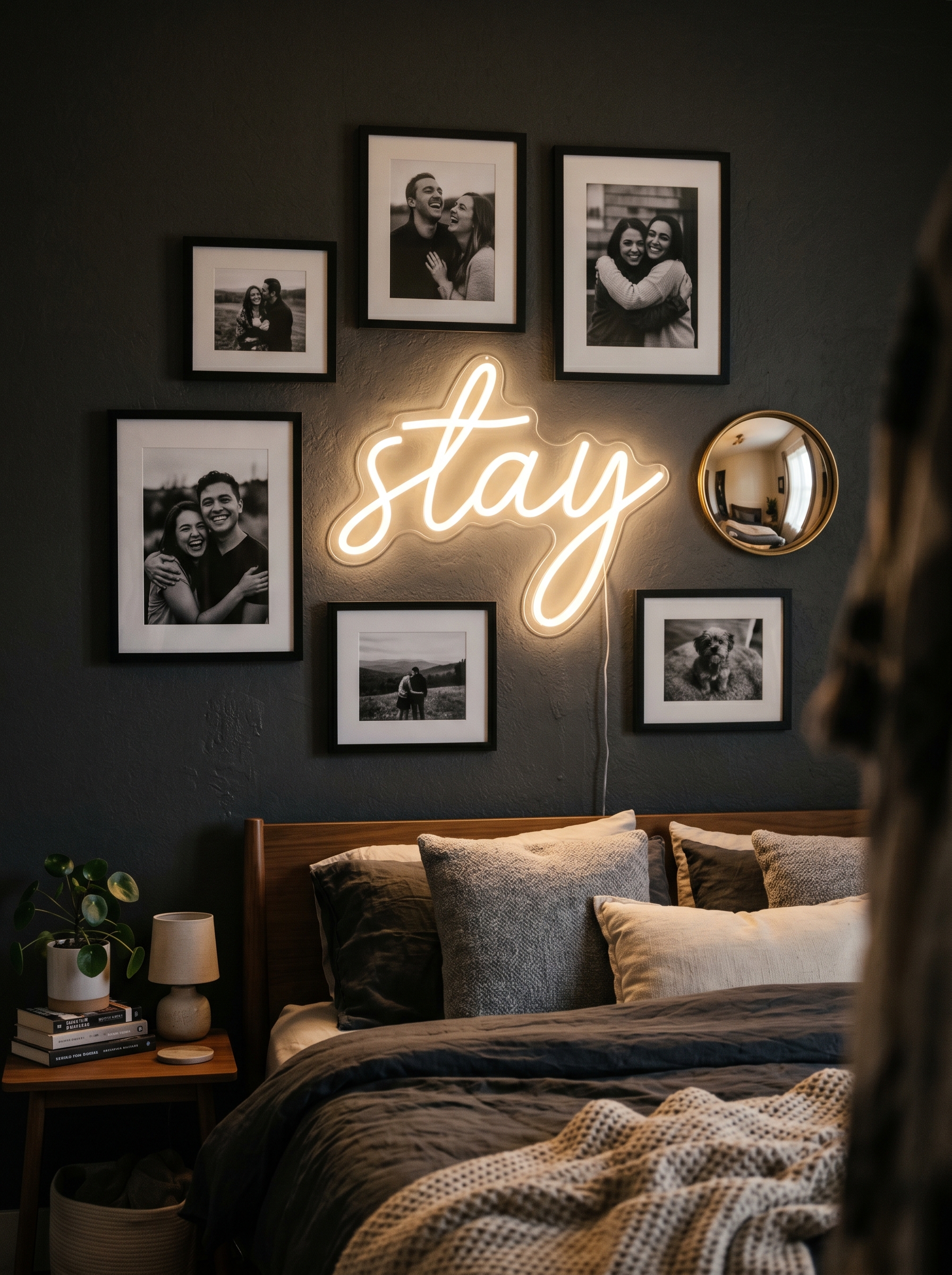
A central warm white neon sign (a word or abstract shape) surrounded by minimalist black-and-white photography.
Expert Tip: Use dimmable, warm white neon (3000K) for sophistication, not harsh colors.
Part 4: Functional & Object-Based (Ideas 19–24)
19. The Picture Ledge Library
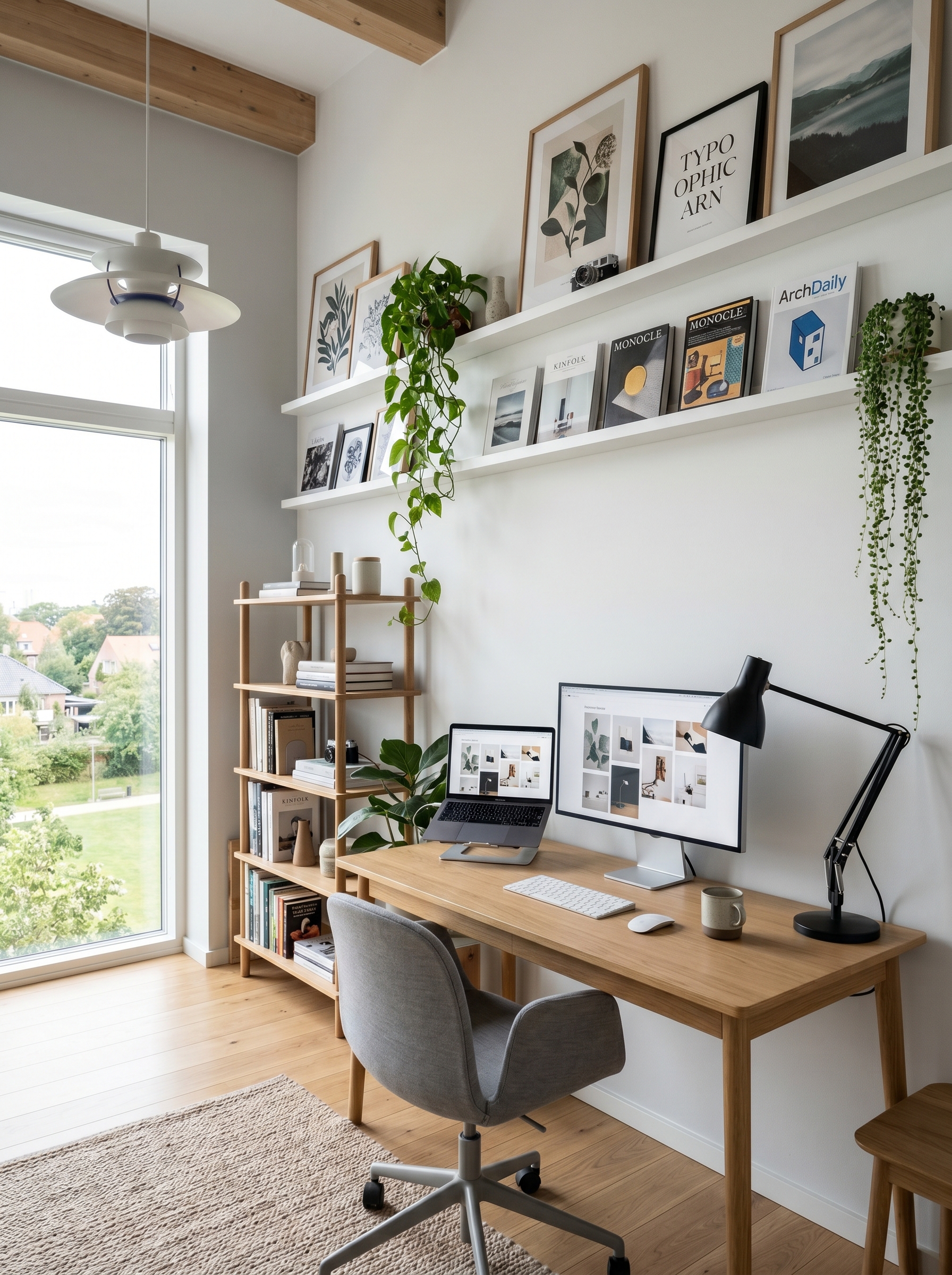
A continuous shelf (10–12 inches from ceiling) running the full length of a room, with leaning art and objects.
Expert Tip: Layer larger pieces against the wall, smaller pieces in front. Zero nails needed.
20. The Hanging Utensil & Kitchen Gallery
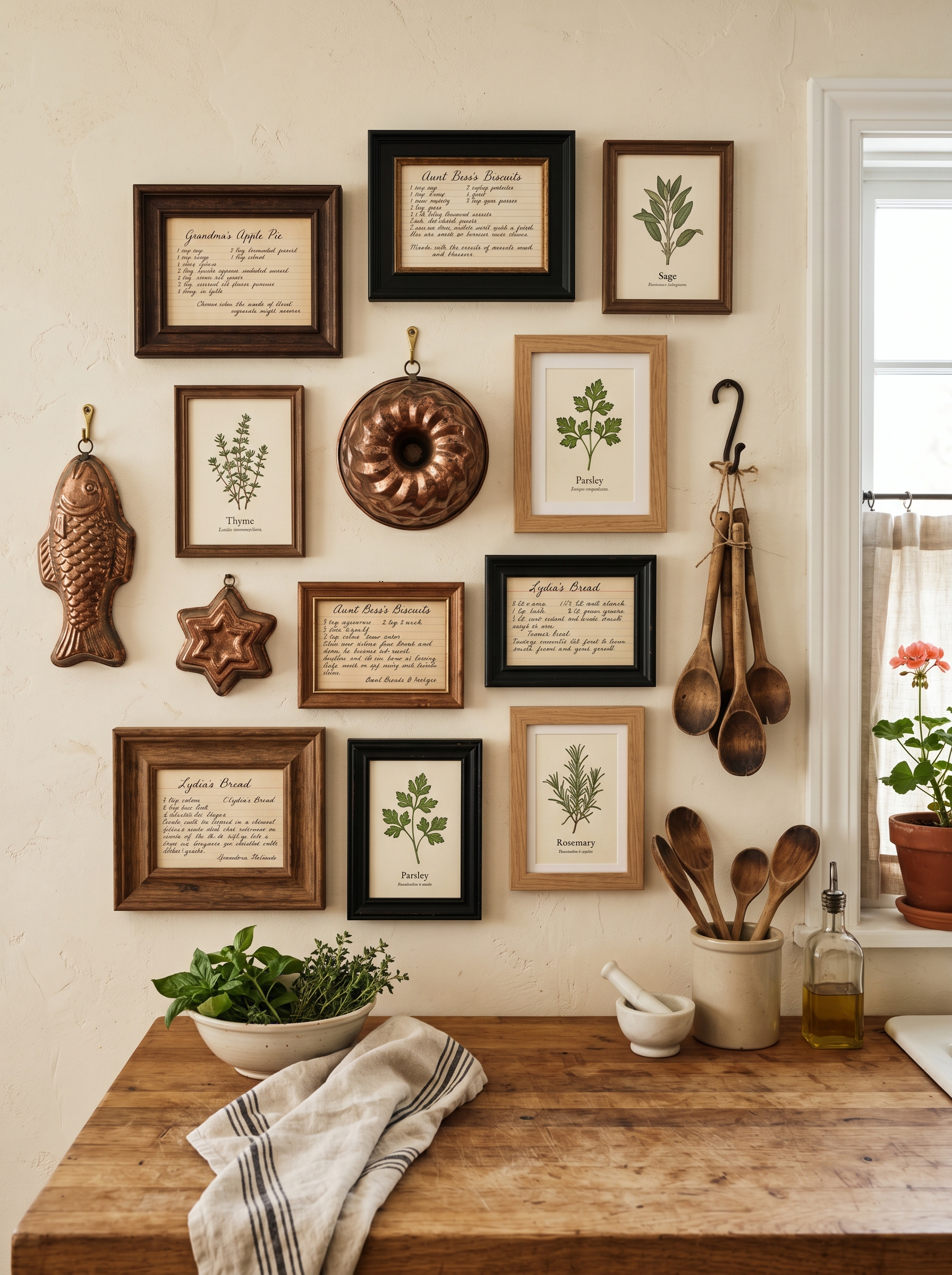
In a kitchen, a wall of vintage copper molds, wooden spoons, framed recipe cards, and small herb prints.
Expert Tip: Use small brass hooks for hanging utensils they become functional art.
21. The Kid's Art Rotating Gallery
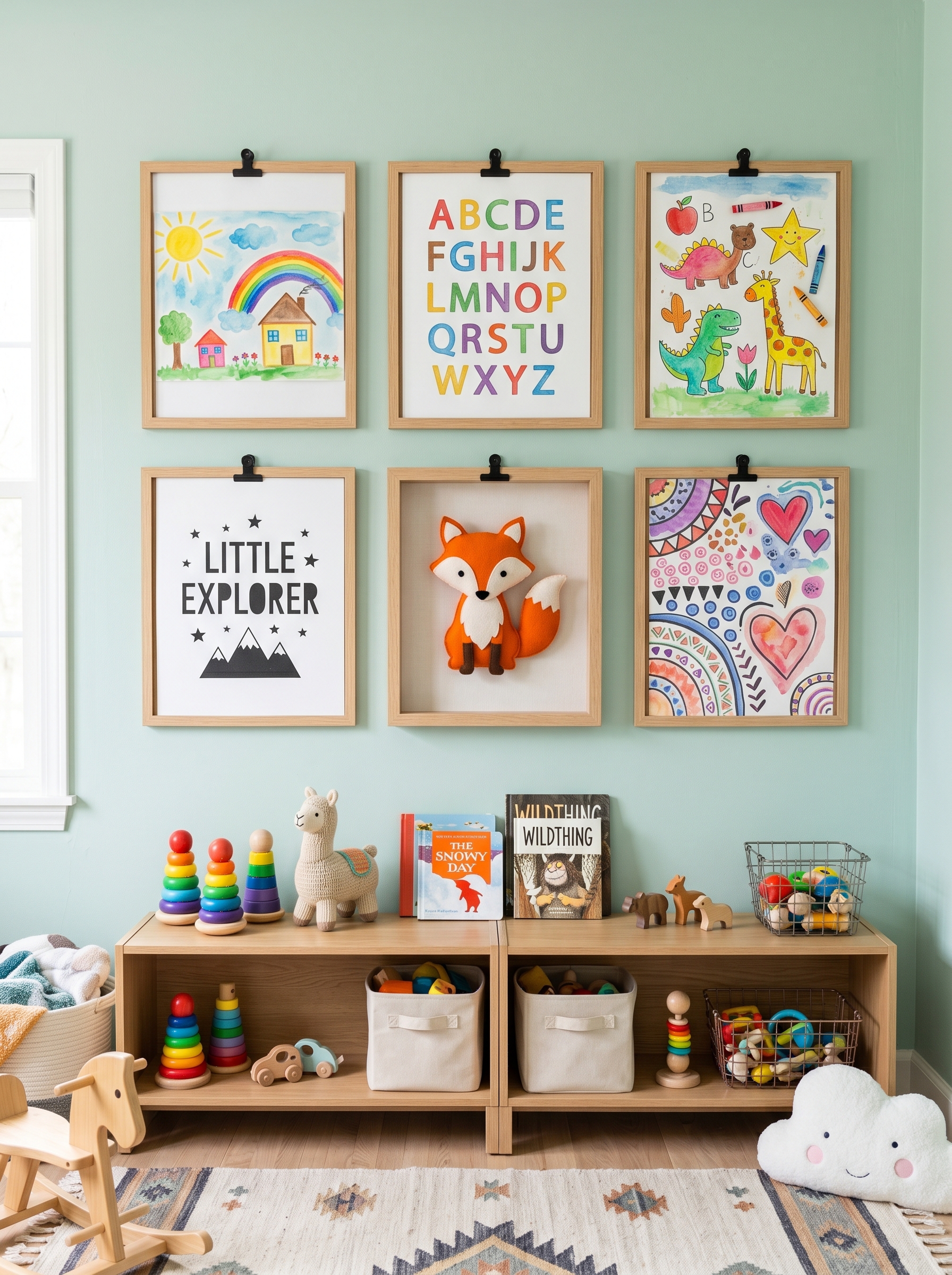
A wall with clip on wire systems or magnetic frames designed for easy rotation of children's artwork.
Expert Tip: Use a bright, happy color for the wall like pale yellow or soft mint to celebrate creativity.
22. The Record Album Cover Wall
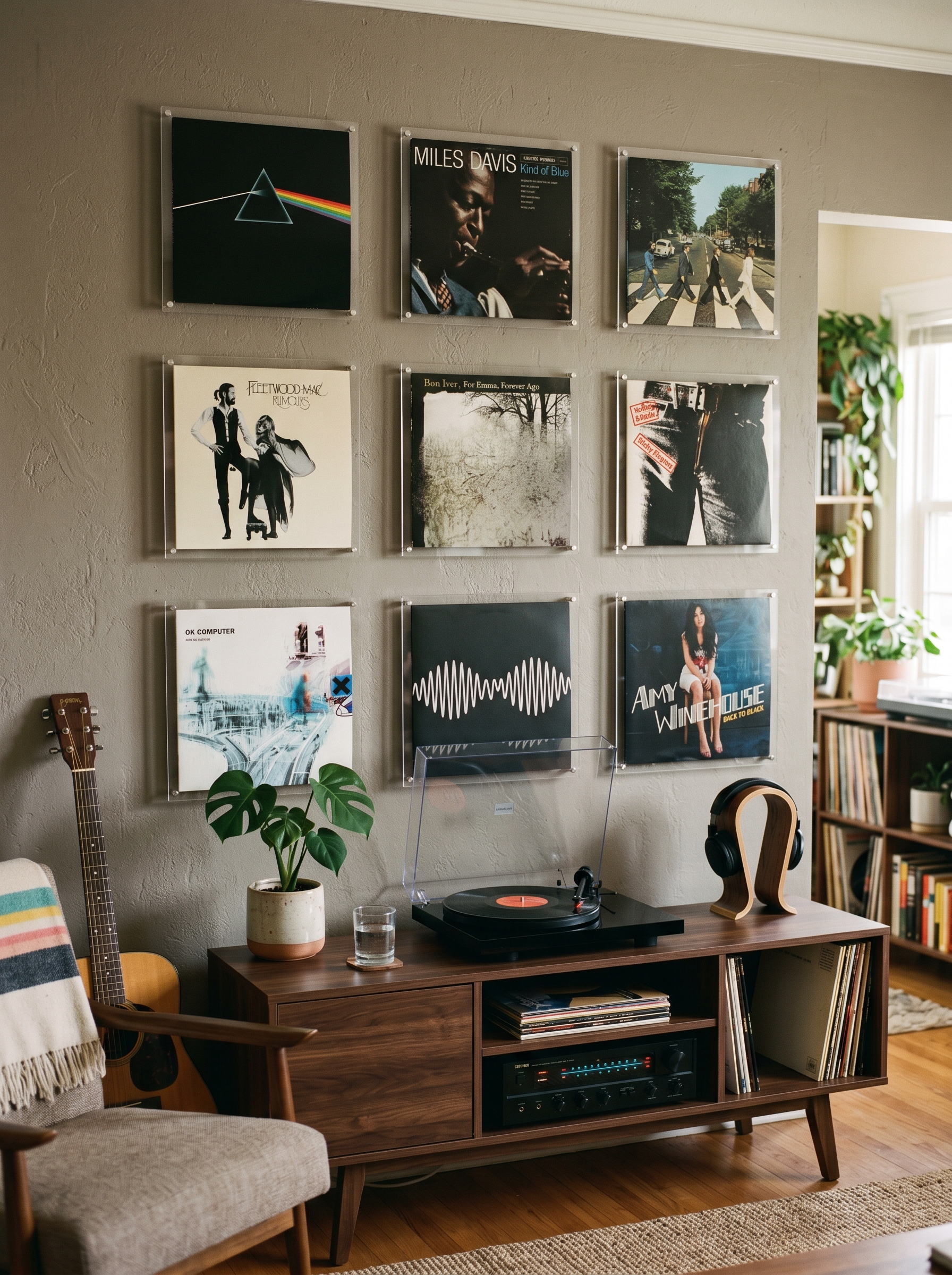
Vinyl record sleeves (12×12) displayed in clear floating frames, arranged in a dynamic grid.
Expert Tip: Rotate albums seasonally or by mood treat them as evolving art.
23. The Plate & Platter Wall
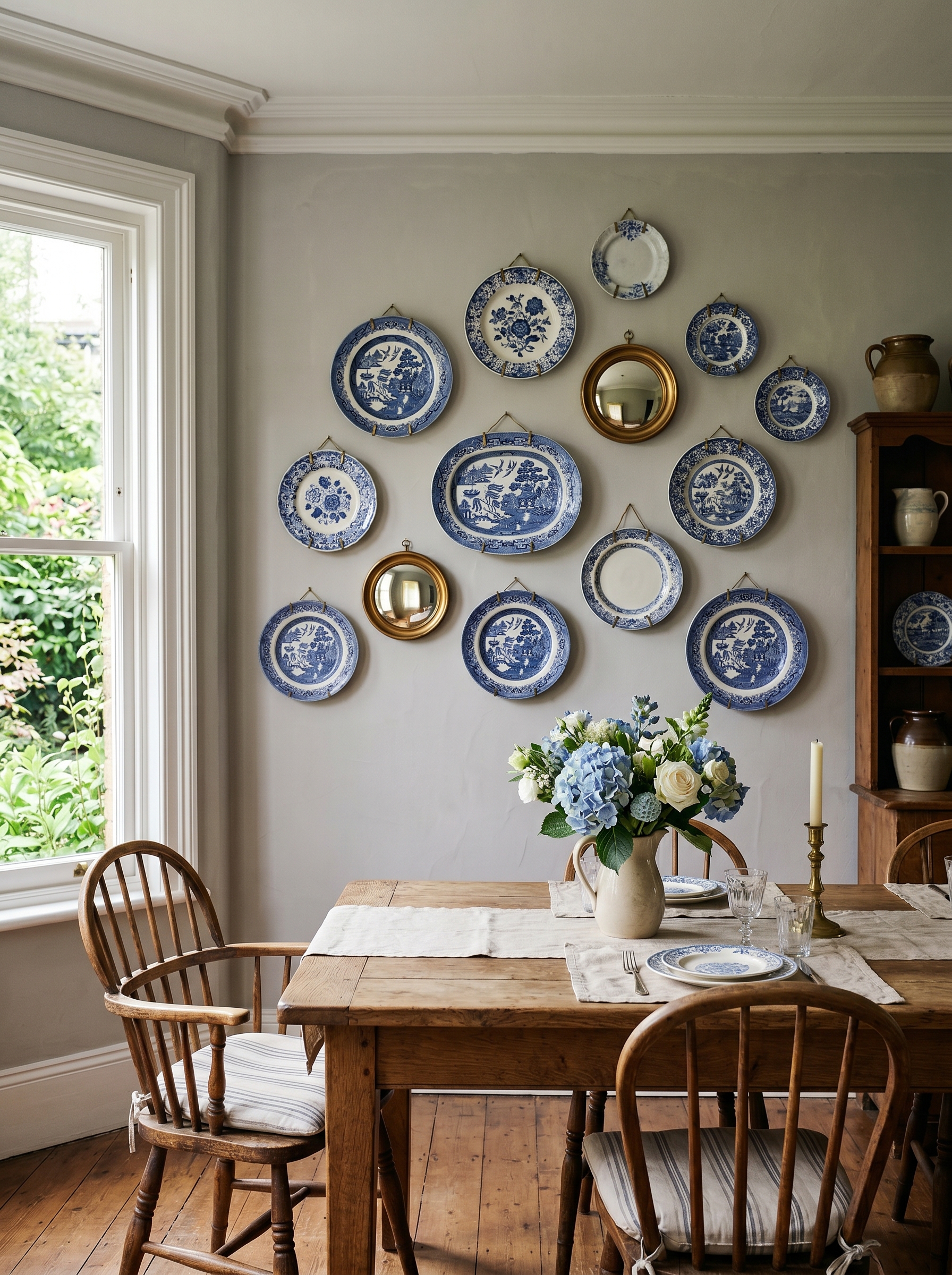
Decorative ceramic plates, platters, and small mirrors hung using plate hangers.
Expert Tip: Use plates with a cohesive color palette (e.g., all blue and white transferware).
24. The Woven Textile Wall
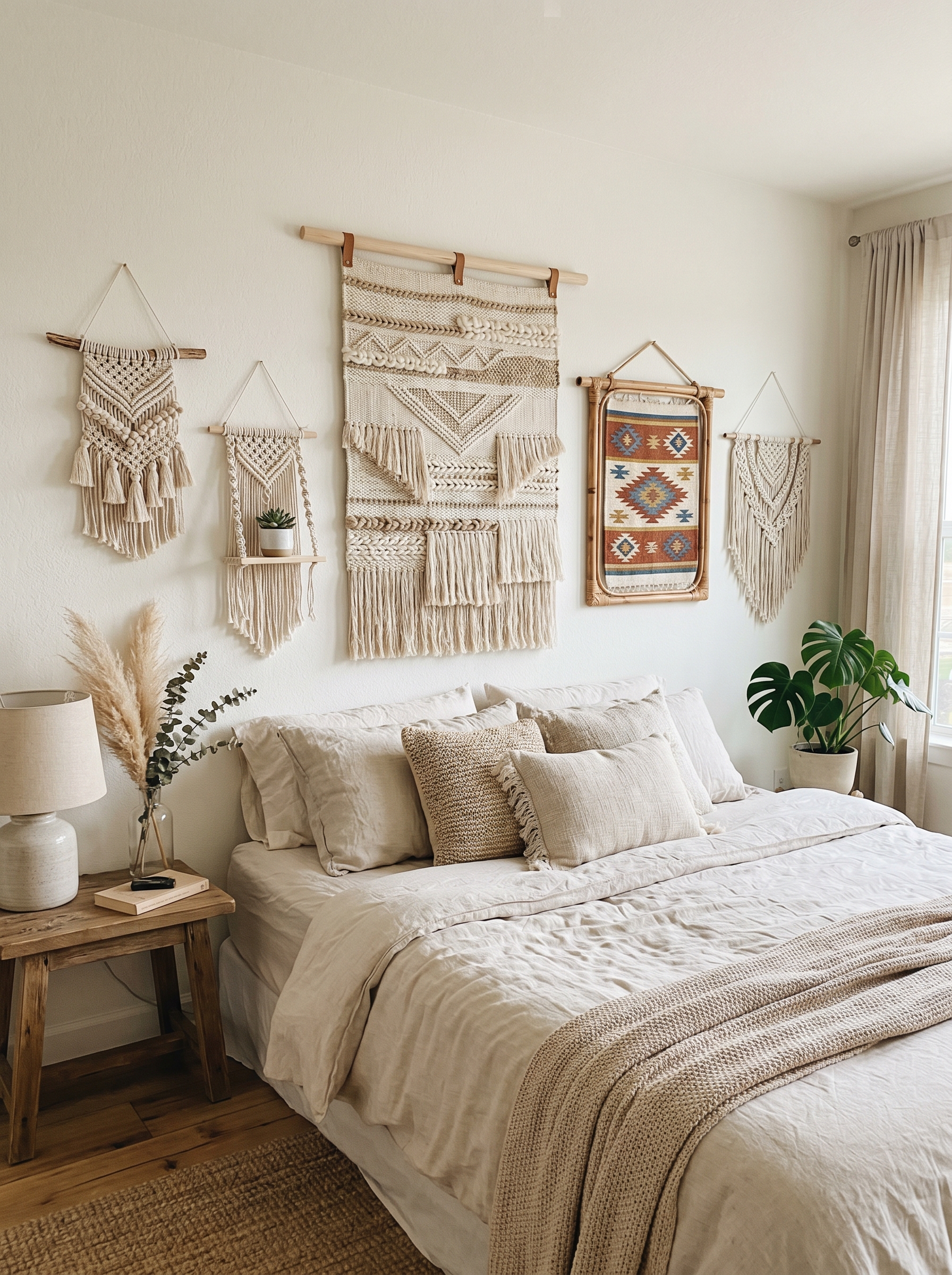
Macramé, woven wall hangings, and framed tapestry pieces in earthy tones.
Expert Tip: Vary textures chunky wool, fine cotton, jute, and silk.
Part 5: Architectural & Structural (Ideas 25–30)
25. The Paneled Wall Insert
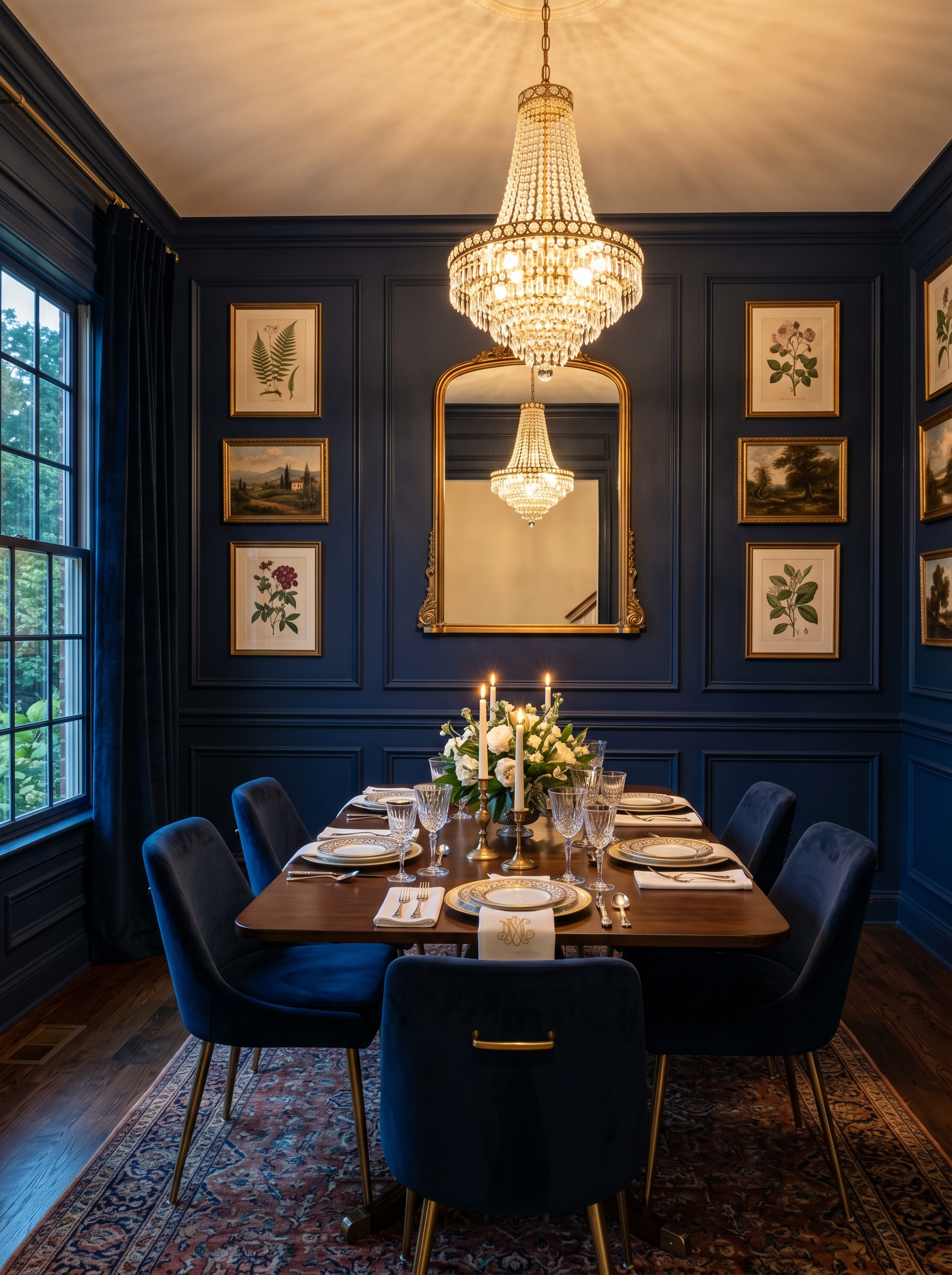
Art hung within the recessed panels of traditional wall molding (wainscoting or board and batten).
Expert Tip: Each architectural panel becomes a "room" for one piece of art keep scale proportional.
26. The Brick or Concrete Wall Gallery
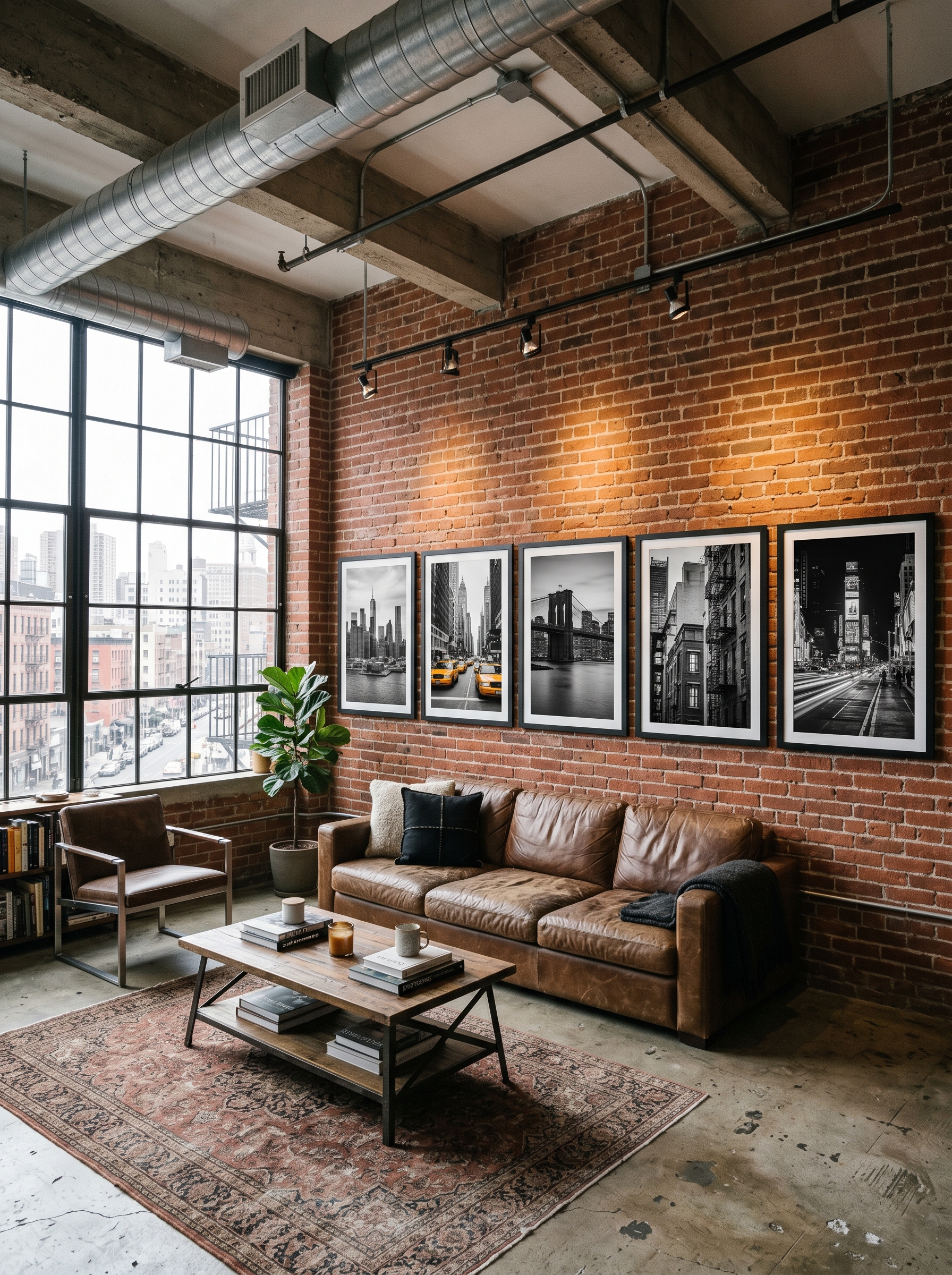
Art hung directly on exposed brick or concrete using wire hangers or adhesive hooks (no drilling into brick).
Expert Tip: Use industrial frames (black metal, raw steel) to complement the wall's texture.
27. The Corner Wrap Gallery
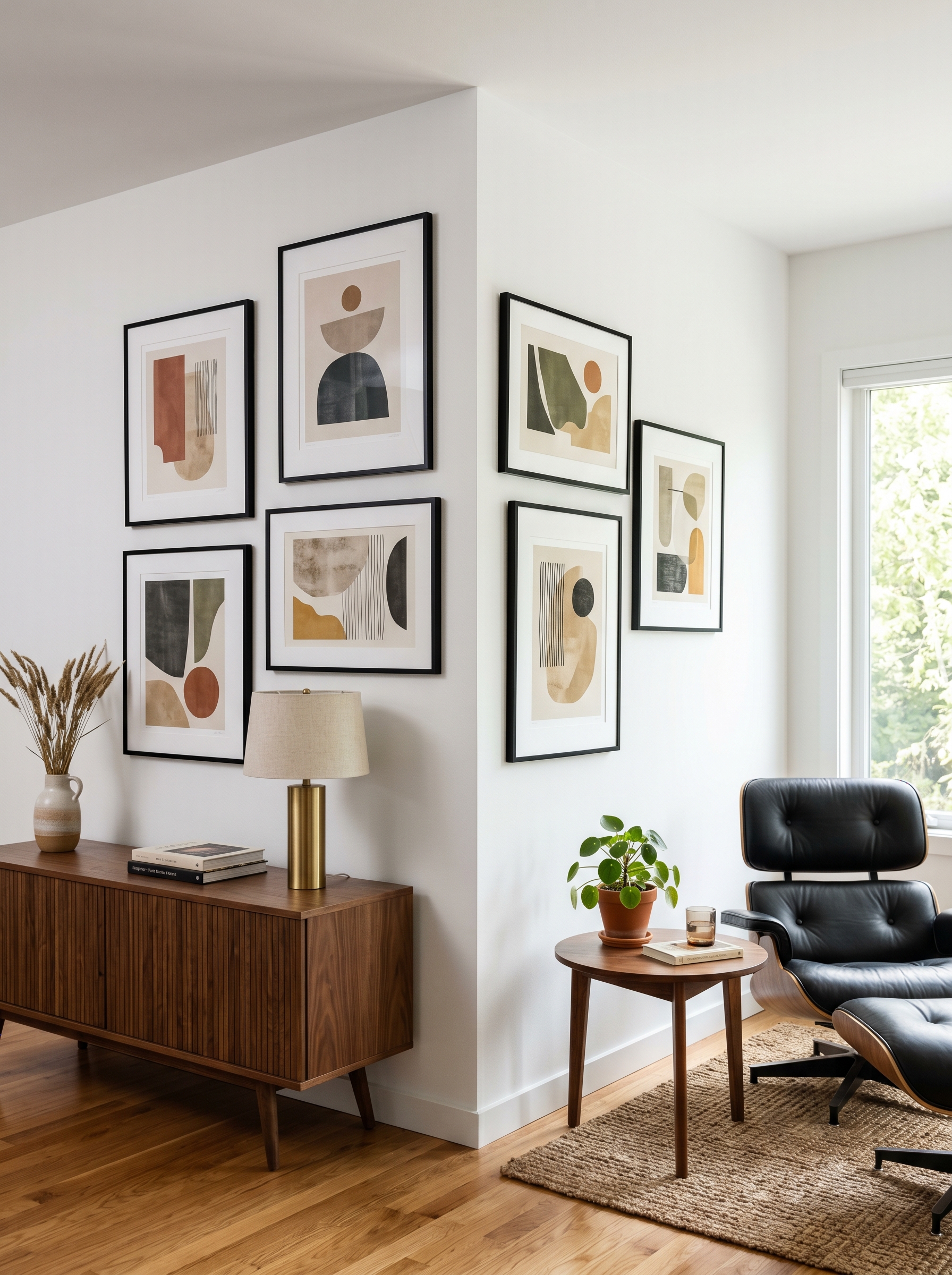
Art that continues around a corner, creating a 90 degree visual flow from one wall to the next.
Expert Tip: The same piece should not straddle the corner instead, use similar frame styles on both sides.
28. The Window Frame Gallery
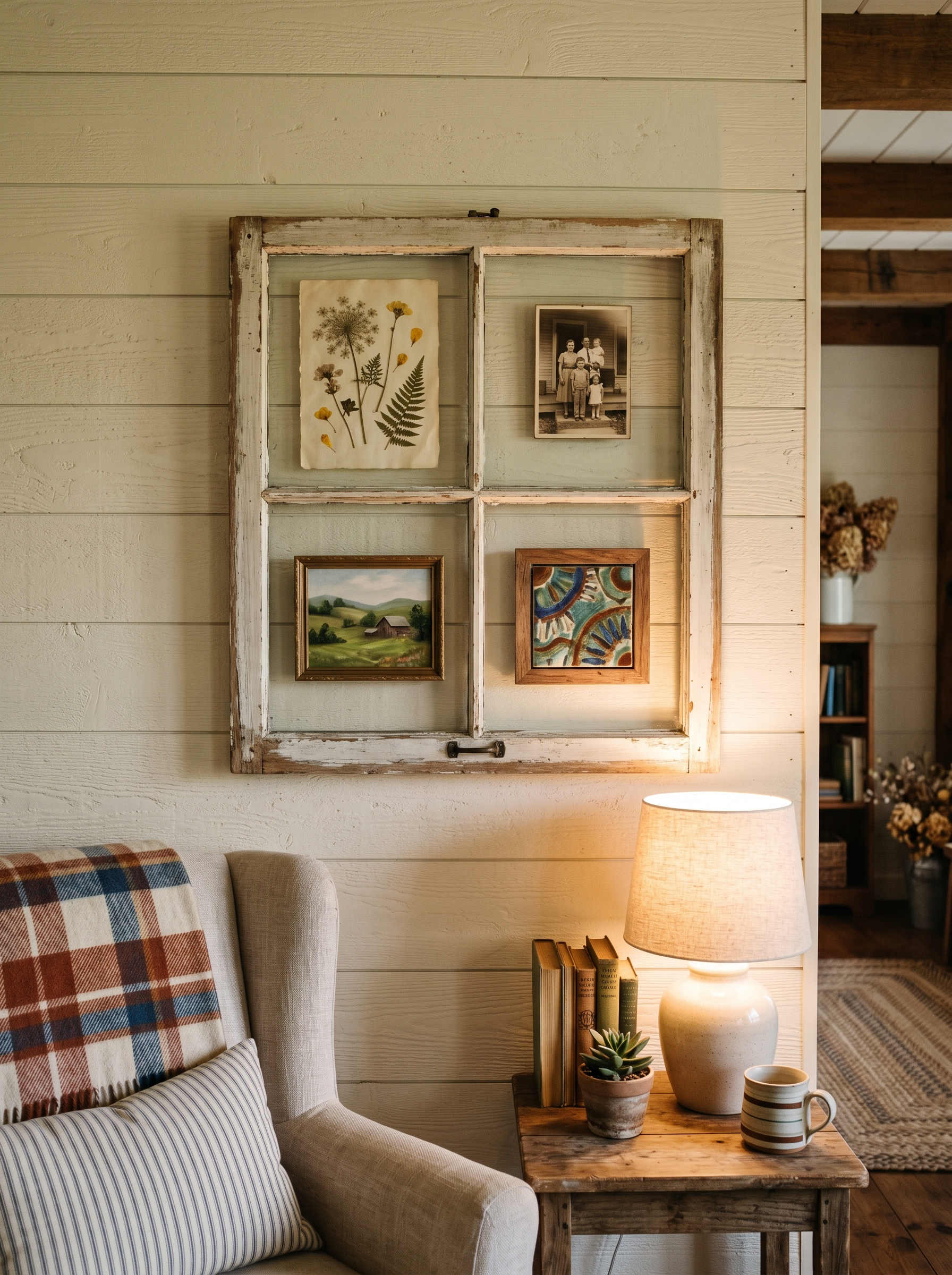
An old salvaged window frame (with glass removed) mounted as a "frame" containing small art pieces inside each pane.
Expert Tip: Paint the window frame a bold color like matte black or deep green.
29. The Backlit Shadow Box Gallery
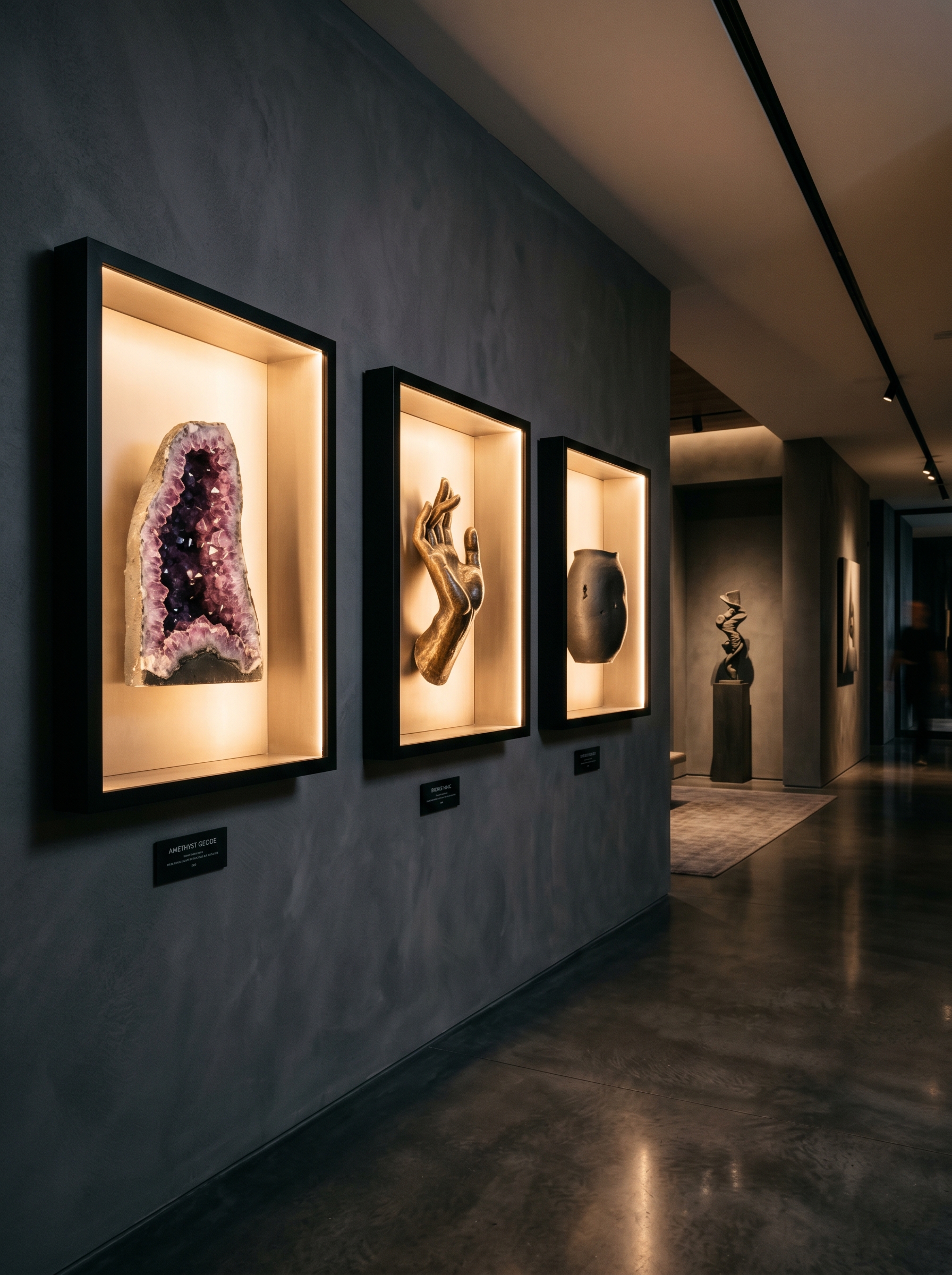
Shadow boxes with integrated LED backlighting, illuminating the objects inside.
Expert Tip: Use warm white LEDs (2700K) for a soft, gallery-like glow.
30. The Negative Space Statement
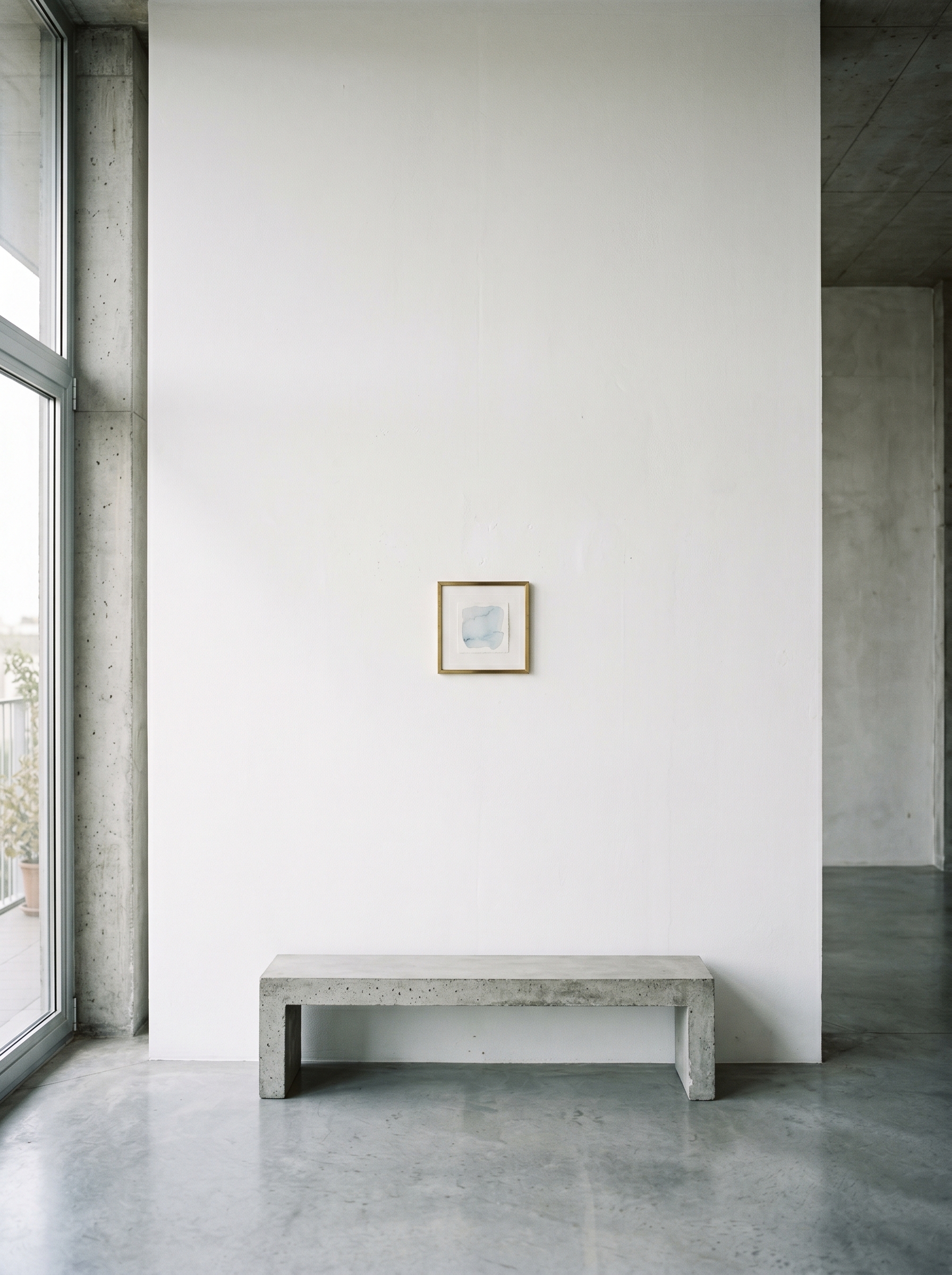
A single tiny frame (4×4 inches) placed in the exact center of a very large empty wall.
Expert Tip: This is an advanced design move everything else in the room must be perfectly balanced.
The Professional's Spacing Cheat Sheet
2–3 inches = Standard cohesive look (most versatile)
4–6 inches = Airy, modern, Scandinavian feel
0–1 inch = Maximalist, dense, salon-style
Center line at 57 inches = Standard eye-level for average adult (adjust for room use)
FAQ: Professional Gallery Wall Questions Answered
Q1: What is the most timeless gallery wall layout?
The symmetrical grid (3×3 or 4×3) using identical frames with white mats never goes out of style. It works in any room and any design era.
Q2: How do I choose the right frame color for my wall?
Match frame metal to your room's hardware (door handles, light fixtures). For wood, pull a tone from your largest furniture piece. When in doubt, matte black or natural oak are universally safe.
Q3: Can I mix different art styles (abstract, photography, vintage)?
Absolutely that's the essence of a curated gallery. The unifying element should be either frame color, mat color, or a consistent subject palette (e.g., all black and white, all nature themes).
Q4: How high should the center of my gallery wall be?
57–60 inches from the floor is the standard museum height. For a gallery above a sofa, leave 6–10 inches between the top of the sofa and the bottom of the lowest frame.
Q5: What's the best way to plan a layout without putting holes in the wall?
Cut kraft paper or newspaper templates of each frame. Tape them to the wall with painter's tape. Adjust until perfect, then mark the hook positions through the paper.
Q6: How many pieces do I need for a good gallery wall?
As few as 3 (a well-balanced triptych) and as many as 30+. For most living rooms, 7–12 pieces create visual interest without overwhelming.
Q7: What's the biggest mistake amateurs make?
Hanging art too high. The center of the entire arrangement should be at eye level, not the top edge. Also, spacing frames too far apart (over 6 inches) makes the wall look disconnected.
Q8: How do I incorporate a TV into a gallery wall?
Mount the TV on the wall and surround it with art on all sides, treating the TV as a black rectangle in the composition. Use matte black frames to help the TV blend when off.
Q9: What lighting is best for gallery walls?
Picture lights (battery-operated or hardwired) mounted above key pieces. Alternatively, gimbal track lighting aimed at the wall. Avoid overhead ceiling lights that cast shadows.
Q10: How often should I update my gallery wall?
Every 1–2 years, or seasonally if you use a picture ledge system. Swap 20–30% of the pieces to keep the wall feeling fresh without starting over.
Conclusion: The Professional's Final Word
A truly exceptional gallery wall is not an afterthought it is a carefully orchestrated composition that balances scale, color, texture, and negative space. The 30 designs presented here range from the serene monochromatic grid to the dramatic floor-to-ceiling tower, offering solutions for every architectural context and personal aesthetic.
As you plan your project, remember the three pillars of professional gallery walls: intentional spacing, consistent sight lines, and curated storytelling. Avoid the common pitfalls of hanging art too high or spacing pieces too far apart. Use the AI prompts provided to visualize your ideas before lifting a hammer, and don't be afraid to experiment with templates on the wall.
Whether you're designing for a minimalist loft, a maximalist family home, or a commercial hospitality space, the gallery wall remains one of the most powerful tools in the interior designer's arsenal. It transforms blank surfaces into conversations, memories into art, and houses into homes. Start with one of these 30 concepts, make it your own, and watch your room elevate.